

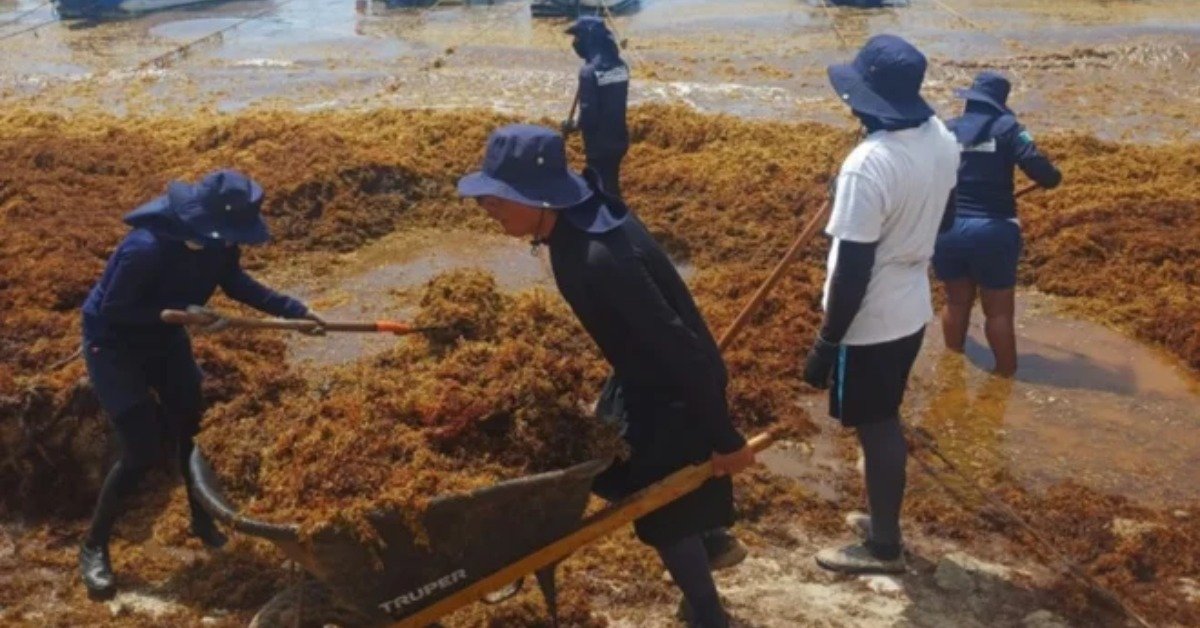
Mexican Navy Tackles Sargassum Invasion in Mexico
This summer, Mexico’s popular Caribbean coastline, stretching from Playa del Carmen to Tulum, is grappling with an unprecedented sargassum seaweed crisis. The Mexican Navy has mobilized to confront this environmental challenge, deploying 13 naval vessels in an aggressive effort to address what experts are calling one of the most severe marine invasions in recent history.
The magnitude of the sargassum seaweed crisis is alarming tourism officials and environmental scientists alike. The National Earth Observation Laboratory at UNAM projects approximately 40 million tons of this invasive seaweed will flood the region’s waters, setting the stage for a significant environmental and economic challenge. Local authorities have been prompted to adopt extraordinary strategies aimed at preserving the pristine beaches that attract millions of international visitors annually.
Esteban Amaro, who leads the Centro de Monitoreo de Sargazo de Quintana Roo, highlights that the Quintana Roo seaweed problem is particularly noticeable in the southern regions, where up to 130,000 tons of sargassum could potentially wash ashore this year, marking a substantial 35% increase over the previous year. This dramatic surge threatens to overwhelm existing cleanup infrastructure and resources.
Economic Impact on Tourism Industry
Rosa Rodríguez of UNAM’s Institute of Limnology and Marine Sciences echoed the gravity of the sargassum seaweed crisis in her remarks to Mexico News Daily, stating, “This year is going to be terrible.” The heavy influx last year had already been devastating for local economies, with beachside communities in Quintana Roo losing up to 50% of their annual income due to the tourism disruption caused by the seaweed.
The tourism industry, which generates over $13 billion annually for the Yucatan Peninsula, faces significant challenges as hotel occupancy rates have already dropped 20% in affected areas. Major resort chains are implementing emergency protocols, including additional staff for beach cleaning and alternative entertainment options for guests when beaches become unusable.
Sargassum drifts may support marine life in the open sea, but once they wash ashore, they decay rapidly, emitting noxious gases like hydrogen sulfide and ammonia. This turns idyllic beachscapes into malodorous and unattractive areas, adversely affecting both tourism and local marine ecosystems. The rotting seaweed also creates breeding grounds for insects and can cause respiratory issues for sensitive individuals.
Ongoing Military and Civilian Response Efforts
Efforts to manage the sargassum seaweed crisis are in full swing, with coordination between federal, state, and local authorities reaching unprecedented levels. In the first couple of months of this year alone, 29,000 tons of sargassum were removed from Mexican beaches, requiring the work of over 2,000 cleanup personnel and specialized equipment worth millions of dollars.
The Mexican Navy’s 13-vessel fleet includes both collection ships and barrier deployment vessels designed to intercept sargassum masses before they reach shore. These military efforts complement civilian initiatives, including innovative recycling programs that convert collected seaweed into construction materials and fertilizers, creating economic opportunities from environmental challenges.
Marc Langevin, general manager of The Ritz-Carlton, Grand Cayman, shared similar experiences faced by the region. “We had a significant amount entering through our canal, ending in our marina on the resort side, and received numerous complaints from guests due to the pungent smell,” he disclosed to Cayman Compass. His resort now employs full-time marine crews specifically for sargassum management.
Scientific Innovation and Future Prevention
Marine scientists are developing new technologies to predict and prevent future sargassum invasions. Satellite monitoring systems now provide real-time tracking of seaweed masses, allowing authorities to deploy resources more effectively. Research into climate change connections suggests that rising ocean temperatures and increased nutrient runoff are contributing to larger, more frequent blooms.
Looking Forward
With the brown tides recurring each year from March to October, the season ahead is expected to present ongoing challenges for tourism-dependent regions of Mexico. The sargassum seaweed crisis demands long-term solutions that balance environmental protection with economic stability. Collaborative efforts among local governments, businesses, and communities will be essential in mitigating the impact. Travelers should monitor beach conditions and consider flexible booking options when planning their beach getaways to these destinations. This environmental hurdle highlights the urgent need for sustainable marine management strategies to maintain the delicate balance necessary for supporting popular tourist spots amidst increasing environmental pressures.

