

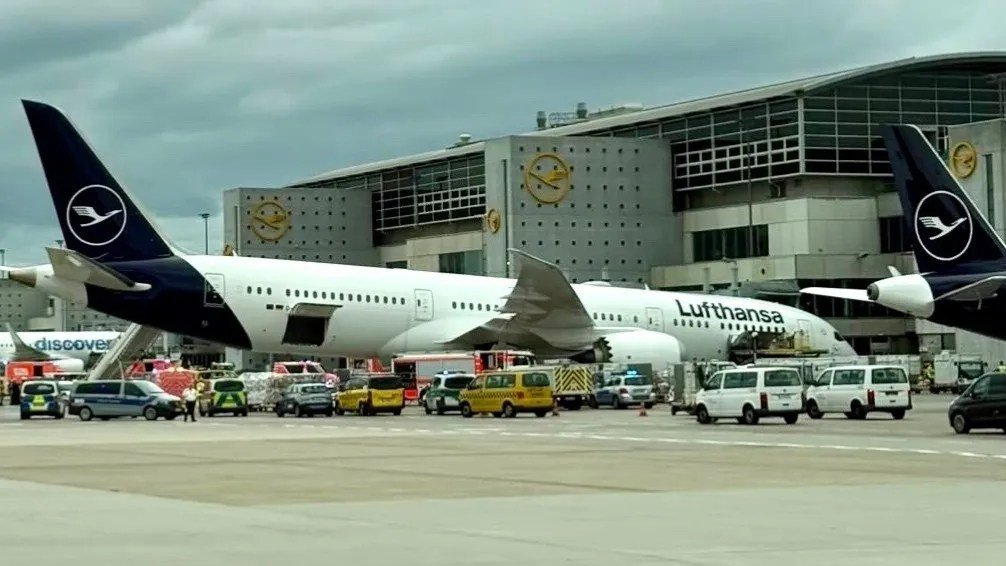
Lufthansa Boeing 787 Nose Gear Collapse Injures Crew in Frankfurt
In a dramatic incident at Frankfurt Airport, a Lufthansa Boeing 787-9 Dreamliner suffered an unexpected nose gear collapse while stationed at the gate on Thursday, injuring several crew members and ground personnel. The aircraft, registered as D-ABPQ, was preparing for boarding procedures for flight LH450 to Los Angeles when the structural failure occurred. Fortunately, no passengers were aboard the aircraft at the time of the collapse, preventing what could have been a far more serious situation.
Details of the Nose Gear Collapse
The newly delivered aircraft, which joined Lufthansa’s fleet in January 2024, experienced substantial damage to its forward fuselage when the nose landing gear unexpectedly gave way. Emergency medical teams were immediately dispatched to treat the injured personnel, while airport operations continued with minimal disruption to other flights. The Boeing 787 nose gear collapse prompted an immediate response from Lufthansa’s crisis management team, who worked swiftly to rebook the 300+ passengers scheduled to travel on the affected flight.
Lufthansa issued a statement emphasizing that passenger and crew safety remains their absolute priority. “We are working closely with all relevant authorities to determine the cause of this incident,” said a company spokesperson. “Our immediate focus is on ensuring the wellbeing of our affected crew members and providing support to passengers whose travel plans have been disrupted.”
Aviation Safety Investigation Launched
The incident has triggered a comprehensive investigation involving multiple aviation authorities, including the German Federal Bureau of Aircraft Accident Investigation (BFU), the European Union Aviation Safety Agency (EASA), and Boeing’s technical teams. The Boeing 787 Dreamliner, known for its advanced composite materials and state-of-the-art technology, has an excellent safety record since entering commercial service in 2011. This makes the nose gear failure particularly noteworthy for industry observers and safety experts.
Initial reports suggest the collapse occurred during routine pre-flight preparations, with no apparent external factors contributing to the failure. Investigators will examine the aircraft’s maintenance records, recent inspection reports, and any potential manufacturing defects that could have led to the structural failure. The aircraft’s relatively new status – having been in service for less than a year – adds another layer of complexity to the investigation.
Industry Impact and Traveler Concerns
The incident raises important questions about modern aircraft reliability and maintenance protocols across the aviation industry. While landing gear failures are statistically rare, they represent one of the most visible types of aircraft malfunctions that can significantly impact passenger confidence. Industry analysts note that such incidents, though concerning, highlight the effectiveness of existing safety protocols that prevented passenger exposure to danger.
For travelers, this event serves as a reminder of the complex engineering systems that support modern aviation. The Boeing 787’s advanced design includes sophisticated monitoring systems that continuously track aircraft performance and component health. The investigation will likely examine whether these systems provided any advance warning of the impending failure.
Long-term Implications for Lufthansa and Boeing
The financial and operational implications for Lufthansa extend beyond the immediate flight cancellation and passenger rebooking costs. The airline faces potential aircraft replacement challenges, insurance claims, and possible fleet-wide inspections depending on investigation findings. Boeing, meanwhile, will be closely monitoring the investigation to determine if any design modifications or service bulletins are necessary for the global 787 fleet.
As the aviation industry continues to recover from pandemic-related challenges, incidents like this underscore the critical importance of maintaining rigorous safety standards while managing operational pressures. The outcome of this investigation could influence maintenance protocols, inspection schedules, and crew training procedures across the industry. Both Lufthansa and Boeing have committed to full transparency throughout the investigation process, recognizing that public trust in aviation safety remains paramount to the industry’s continued success.

