

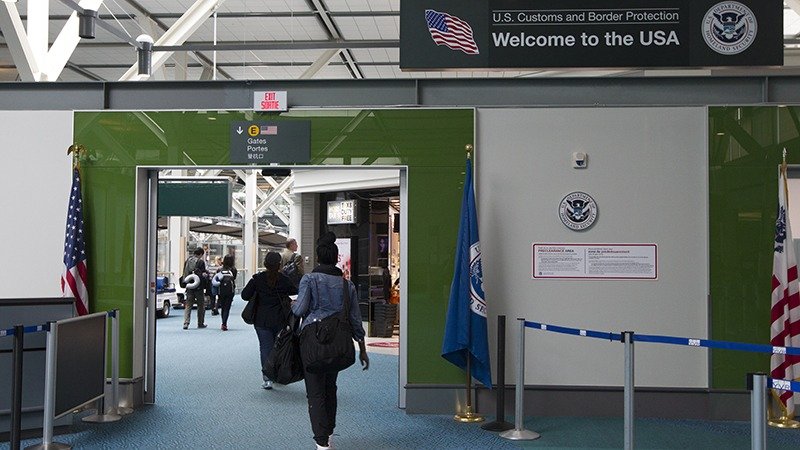

The US Ambassador to Canada, Pete Hoekstra, recently issued a stark warning regarding the airport pre-clearance system that has been in effect since 1952. At the Global Business Forum in Banff, Hoekstra expressed concern over the declining number of Canadian travelers heading to the United States. He indicated that this drop may prompt Washington to reconsider the pre-clearance arrangement, which is vital for streamlined travel.
Hoekstra pointed out that the pre-clearance system is funded by the US government and suggested that current traffic levels may not justify this expense. He stated, “We’re uncertain if we can sustain these numbers… It’s time to reassess some of these matters.” This remark raised alarms among industry leaders, as losing pre-clearance could significantly impact travel dynamics for Canadians.
Implications of Ending Pre-Clearance
During the forum, former Canadian diplomat Colin Robertson countered Hoekstra’s assertions by asserting that the elimination of pre-clearance would be detrimental to US interests. Canadians account for a crucial segment of American tourism, and maintaining the pre-clearance system provides both efficiency for travelers and benefits for airlines.
How Pre-Clearance Works
The pre-clearance process allows travelers bound for the US to complete American customs procedures at major Canadian airports, including the upcoming addition of Toronto’s Billy Bishop Airport. This system ensures that passengers arrive in the US as if they are domestic travelers, bypassing lengthy customs lines. This efficiency is particularly vital for international flights and connecting travel routes.
“That would put a nail in the coffin of transborder air traffic.”
The Economic Consequences
Experts warn that retracting or scaling down the pre-clearance system could critically undermine Canadian air carriers. Aviation management professor John Gradek from McGill University noted that eliminating the pre-clearance would reduce the appeal of connecting flights through Canada, a situation that would adversely affect airlines dependent on U.S. traffic for international services. A recent industry report highlighted that a single year-round service between Canada and a US airport can create 30-50 full-time jobs and generate between $10-15 million in annual visitor expenditures in the United States. The economic ripple effects extend beyond just tourism, impacting local economies profoundly.
A Warning for Travelers and Airlines
Canadian officials and industry leaders interpret Hoekstra’s comments as a significant indication: if travel from Canada to the United States does not recover, Washington could indeed follow through with its threats regarding pre-clearance. For travel advisors, this signals potential changes in itineraries where clients might face longer transit times when traveling to the U.S. Airlines would need to revisit their transborder route strategies and models for connecting flights.
Rob Kokonis, President of AirTrav, articulated the situation succinctly: “That would put a nail in the coffin of transborder air traffic. And don’t forget, crossing into the US by air is not free; passengers pay fees that support pre-clearance inspections.” He further emphasized that the pre-clearance system is essential for maintaining the competitiveness of the Canadian travel sector.
In conclusion, the fate of the airport pre-clearance system hangs in the balance as US officials examine travel patterns. The potential ramifications for Canadian travelers, airlines, and the broader economy underscore the urgent need for a reassessment of cross-border travel policies.

