

Tourism leaders are optimistic that a depreciating dollar will attract more visitors to the U.S., but looming visa fee increases and domestic price hikes could hinder this growth as the nation grapples with a perception of low value offerings.
According to a recent report from the National Travel and Tourism Office, international tourists identified cost-related aspects—specifically price and perceived value for money—as the weakest components of the U.S. travel experience. The study, conducted in 2023, shows that while the U.S. excels in categories such as culture, shopping, and transportation infrastructure, it falls short in delivering a competitive value proposition.
This report is especially relevant as the U.S. dollar was stronger at the time of data collection but has since dropped significantly. According to Morgan Stanley, the value of the dollar decreased by approximately 11% in the first half of 2025, marking the most substantial decline in over five decades.
Industry experts express hope that this currency fluctuation will lead to an uptick in inbound tourism. “Cost is always a central factor influencing international travel decisions,” stated Fred Dixon, CEO of Brand USA. He noted, “Global travelers are considering affordability across all destinations.”
However, the optimism is tempered by the introduction of a new $250 visa fee for travelers from countries that do not participate in the Visa Waiver Program. This fee affects key markets such as Mexico, China, India, and Brazil, and excludes visitors from Canada and nations within the Visa Waiver Program, which includes many European countries, Australia, Japan, and South Korea.
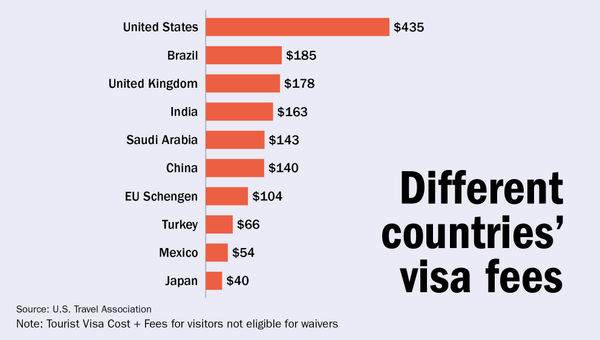
The U.S. Travel Association estimates that this additional visa fee could deter up to 1 million international visits in 2026 and lead to a total of 3.5 million fewer visits by 2028. The financial implications are significant, with projected losses in travel-related revenue reaching approximately $10.6 billion.
Erik Hansen, head of government relations for U.S. Travel, described the new fee as a “travel-deterrence fee,” asserting that it escalates the upfront costs of visiting the U.S. by a staggering 130%. “For a family of four, this equates to an extra $1,000—funds that would have benefited American businesses,” he noted. He further emphasized that these fees do not contribute to enhancing the travel experience and may push international visitors to opt for alternative destinations.
Additionally, while a weaker dollar may lower the relative cost of traveling to the U.S., international visitors will still face the high prices that Americans have been experiencing recently. The Consumer Price Index, which assesses a range of consumer goods and services, rose by 2.9% in August compared to the previous year.
This spike in costs is taking a toll on travel companies offering domestic experiences. Catherine Prather, president of the National Tour Association (NTA), reported that rising vendor costs are the foremost challenge facing operators in 2026. She added that declining consumer confidence further complicates the landscape for both inbound international travel and domestic tourism in North America.

