

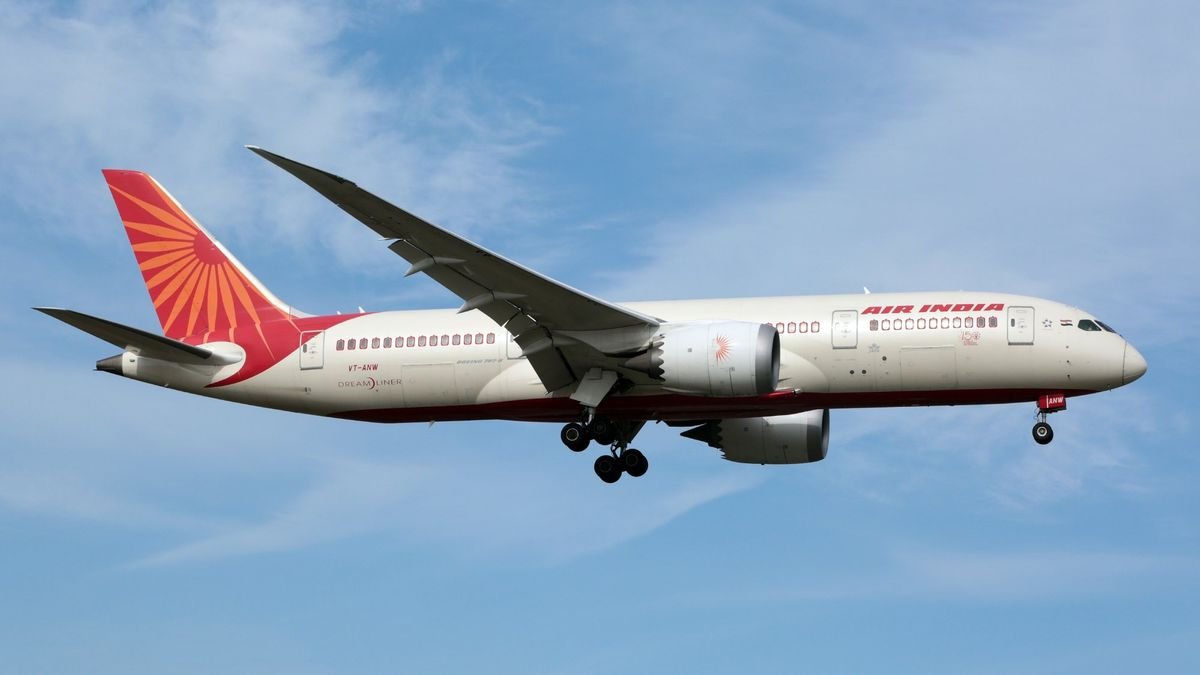
NEW DELHI, India — With recent developments in the aviation sphere, Air India has found itself at a crossroads. Just ten days before the tragic Air India Flight 171 crashed into a medical college hostel in Ahmedabad, resulting in the loss of 270 lives, the airline’s CEO, Campbell Wilson, shared his ambitious vision for the airline during a briefing at the IATA Annual General Meeting.
Air India’s Transformational Journey
Since the Tata Group’s acquisition of Air India from the Indian government, significant strides have been made to reinvigorate the long-neglected airline. “Anywhere we point an aircraft, I think we can probably fill it,” Wilson asserted, reflecting the airline’s plans to capitalize on the growth potential of India’s aviation market.
Over the past three and a half years, Tata has invested heavily in Air India, ordering a staggering 570 aircraft, with nearly 520 still awaiting delivery. Recent mergers with Vistara and AirAsia India have further bolstered Air India’s position in both domestic and international aviation. These initiatives have resulted in more than doubling international weekly frequencies since going private.
Challenges Faced by Air India
However, the recent disaster presents a new set of challenges for the airline. John Strickland, director of JLS Consulting, noted, “No airline CEO wants to face a challenge of this magnitude,” especially while attempting to overhaul a legacy airline struggling with decades of underinvestment and mismanagement.
Before the crash, Air India’s transformation initiatives were already complex. Wilson highlighted that past neglect had led to outdated cabin interiors and obsolete IT systems. The situation was dire before Tata’s takeover; one-third of Air India’s fleet was grounded and stripped for parts.
Operational Improvements and Future Plans
Since the acquisition, Air India has successfully returned most grounded planes to operational status, invested $200 million to replace critical IT systems, and recruited 6,000 new staff members. With the infusion of Vistara’s modern fleet, 50% of Air India’s fleet now features upgraded interiors, including new Airbus A350s.
Despite these advancements, challenges in operational efficiency remain. In May, Air India’s on-time performance was only 71%, ranking it among the bottom 15% of global airlines, while for the fiscal year ending March 31, the punctuality rate was a mere 68%, according to BW Businessworld.
Economic Factors Influencing Growth
The growth of Air India is also influenced by favorable economic conditions in India. The country is set to surpass Japan as the fourth-largest economy, with forecasts indicating an average annual growth rate of 5.4% through 2050, according to the Economist Intelligence Unit. However, despite being the world’s most populous country, Indian airlines operate only 69 widebody aircraft, far fewer than their global counterparts, undermining the capacity to meet rising international demand.
Interestingly, while India boasts the world’s third-largest domestic airline market, its scale is merely one-seventh the size of China’s, as indicated by IATA figures. This discrepancy highlights the untapped potential within the Indian aviation sector. “If Indian travelers start flying at the same rate as their Chinese counterparts, the growth would be phenomenal,” Wilson remarked at the IATA conference.
Confronting the Aftermath of Flight 171
As Air India grapples with the implications of the Flight 171 tragedy, the focus on safety and reliability has intensified. On June 16, the airline’s chairman, N. Chandrasekaran, urged employees at a company town hall to view the incident as an impetus for fostering a safer airline culture.
The investigation into the crash may take months, and if technical issues are found with the Boeing 787 Dreamliner or its General Electric GENx engine, the reputational fallout may be manageable. Conversely, if deficiencies within the airline’s safety protocols are implicated, the damage could be far-reaching. “Whatever the cause, it means that management will need to intensify efforts to ensure a safe, reliable, and high-quality airline experience,” Strickland concluded.

