

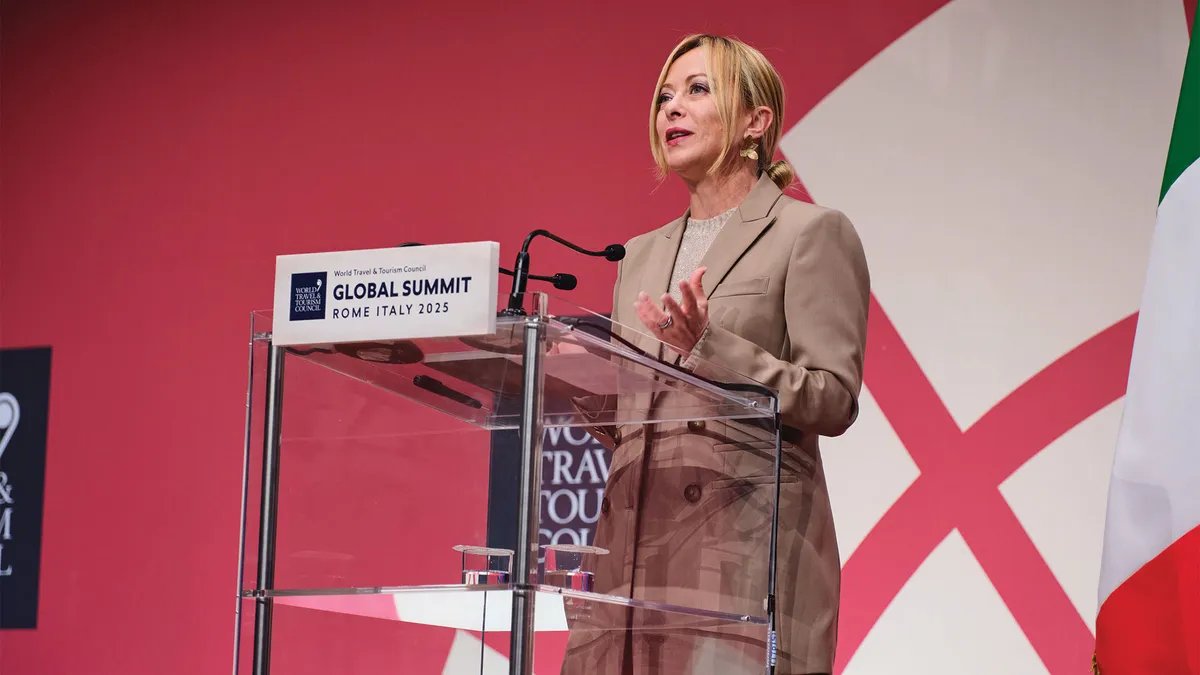
ROME — At the WTTC Global Summit, the discussion shifted away from overtourism challenges in popular destinations to highlight an equally pressing issue: the unequal distribution of tourism within Europe. The panelists underscored that many hotspots are experiencing overcrowding, while numerous regions remain under-explored and are essentially “starving” for visitors.
For instance, Italy ranks as the fifth most visited country globally. According to Tourism Minister Daniela Santanche, a staggering 96% of the nation faces “undertourism,” while Prime Minister Giorgia Meloni emphasized the necessity of spreading Italy’s annual 58 million tourists across its diverse landscapes.
The sentiment was echoed by Francesco Cacciapuofi, Chief Sales Officer for Trenitalia, who pointed out that a whopping 75% of international visitors concentrate their travels in just 4% of Italy. “This provides a significant opportunity to promote the remaining 96% of our nation, encompassing over 5,500 small towns and villages,” he noted.
Elie Maalouf, CEO of IHG Hotels & Resorts, expanded on the prime minister’s observations, stating that Italy’s situation reflects a broader trend in countries such as Spain and France. “We do not have an overtourism issue in the world; rather, we grapple with a mal-distribution of tourism,” he asserted. “Tourism is overly concentrated in select areas, leaving others neglected. The solution lies in redistributing visitor traffic.”
When WTTC Chairman Manfredi Lefebvre queried Maalouf on strategies for achieving this balance, the latter suggested collaboration with governmental bodies to enhance marketing for less-traveled regions. “While social media technology helps with outreach, it can also consolidate crowds into popular destinations,” he explained.
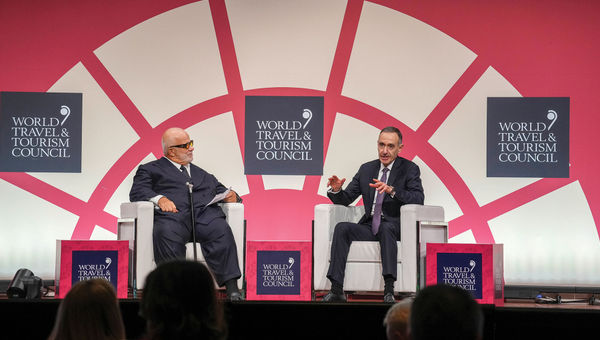
WTTC Chairman Manfredi Lefebvre (left) interviewing IHG Hotels & Resorts CEO Elie Maalouf.
Maalouf critiqued the tendency for travelers to gravitate toward “top-10” lists, which often limits exploration to well-trodden locales. “There are countless remarkable destinations waiting to be discovered,” he asserted, urging both governments and businesses to promote these hidden gems.
Additionally, investing in tourism infrastructure in lesser-known areas is paramount. IHG’s initiative in northern Umbria exemplifies this approach, opening doors to regions that remain underappreciated. “When we enhance amenities in these areas, travelers will start exploring parts of a country that are not linked to traditional tourist paths—freeing up overcrowded hotspots,” he remarked.
Maalouf concluded with an essential message: “While there is no criticism of popular transport methods like buses and cruise ships, it’s critical to ensure a more equitable distribution of tourism revenue.” This shift could lead to a more balanced and sustainable future for tourism in Italy and beyond.

