

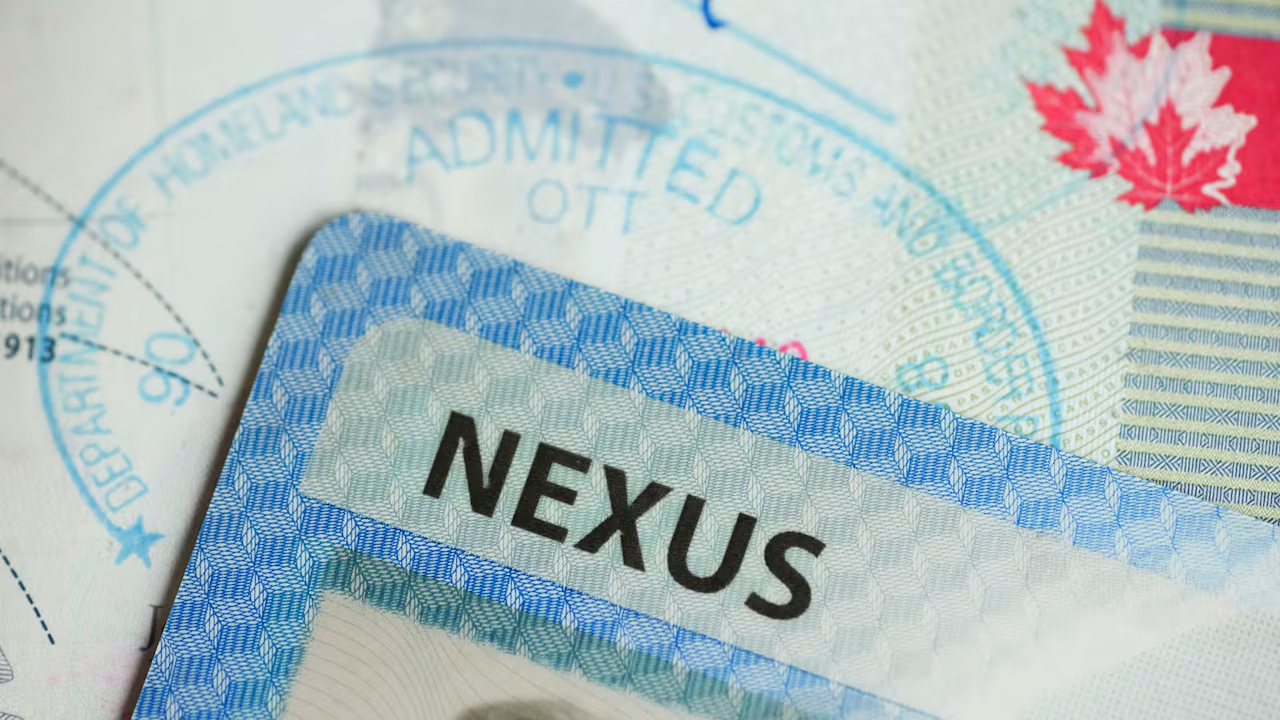
Nexus Pre-Clearance Suspension Deepens Travel Woes
As the United States and Canada face one of the most challenging travel seasons this winter, marked by a historic winter storm, travelers bound for the United States from Canadian airports are dealing with added disruptions due to the Nexus pre-clearance suspension. This suspension, influenced by the ongoing partial US government shutdown, has caused extended security delays and inconvenience at major Canadian airports. The Nexus and Global Entry programs, known for facilitating quicker processing times, have seen temporary pauses, particularly impacting airports in Calgary, Montreal, Vancouver, and Toronto.
Challenges at Canadian Airports
Over the past few days, travelers in these airports have experienced noticeable delays. Although Toronto Pearson and Montréal-Trudeau have managed to resume both Nexus and Global Entry services, Calgary and Vancouver are still struggling with the consequences of the US government shutdown. As of 08:30 EST Monday, the disruptions linger in these locations.
Vancouver International Airport has communicated via its official channels that the disruption stems directly from the US government’s partial shutdown. Similarly, Calgary International Airport emphasized in its communication to The Canadian Press that Nexus program operations are dependent on US Customs and Border Protection, providing limited additional details about potential resolution timelines.
Effects on Travelers and Border Processing
The Nexus program is essential for smooth border crossings between Canada and the US, offering speedy clearance to pre-approved, low-risk travelers. Nexus members, who benefit from significantly shorter wait times, find the Nexus pre-clearance suspension particularly disruptive. With Nexus membership offering privileges for five years, frequent travelers find themselves affected by these unforeseen delays that can extend processing times from minutes to hours.
Business travelers who rely heavily on the expedited processing are facing the most significant impact, with many reporting missed connections and extended layovers. The suspension affects not only security screening but also immigration processing, creating bottlenecks throughout the entire departure process at affected airports.
Looking deeper into the US government shutdown, it has arisen from a standoff between Democrats and the White House over funding for the Department of Homeland Security (DHS). Nevertheless, TSA PreCheck and Global Entry have seen no interruptions and continue to operate normally, as indicated in a statement from the DHS issued at 12:15 EST.
Economic Impact on Cross-Border Travel
The suspension is having significant economic implications for both countries’ travel industries. Cross-border travel between Canada and the US represents billions of dollars in annual economic activity, with business travel accounting for a substantial portion. Airlines operating trans-border routes are reporting increased passenger complaints and requests for rebooking as travelers seek to avoid affected airports.
Travel agencies are advising clients to add extra buffer time for US-bound flights departing from Canadian airports, with some recommending alternative routing through unaffected airports where possible. The uncertainty surrounding the duration of the Nexus pre-clearance suspension is making long-term travel planning particularly challenging for frequent cross-border travelers.
Industry-Wide Concerns and Operational Challenges
Beyond individual inconveniences, the prolonged suspension alarms the broader travel industry. Having already faced strain due to the severe Northeast storm that led to over 5,000 flight cancellations, the industry now grapples with these growing operational issues. Efforts to maintain seamless operations by airlines and airport authorities have been met with significant hurdles due to compounded disruptions.
Airport authorities are working to implement temporary measures to manage increased wait times, including additional staffing for regular security lines and enhanced passenger communication systems. However, these measures cannot fully compensate for the efficiency loss from the suspended trusted traveler programs.
For travelers planning journeys to the US through Canadian airports, it is advisable to anticipate extended processing times until regular operations recommence. This episode underscores the interconnectedness of international travel logistics and the far-reaching impacts of political variables beyond national borders.
Conclusion and Traveler Recommendations
In conclusion, while TSA PreCheck and Global Entry users face no immediate disruptions, Nexus cardholders using Calgary and Vancouver must brace for uncertainty regarding service restoration. Travelers are advised to remain updated through official airport and government sources to minimize inconvenience as the situation develops. These ongoing US and Canada travel delays stress the criticality of robust, adaptable international travel systems and highlight the vulnerability of cross-border travel infrastructure to political disruptions. As negotiations continue in Washington, the travel industry watches closely for the resolution of the Nexus pre-clearance suspension that has disrupted thousands of travelers’ plans.

