

“Very vertical, very green.” Those were my first impressions as United Airlines’ inaugural flight descended toward Funchal, the capital of Madeira, in June.
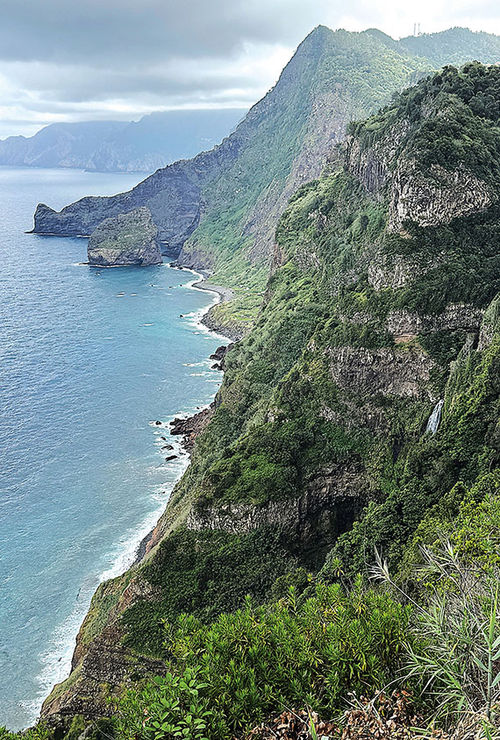
Madeira’s southern coastline features dramatic cliffs rising directly from the Atlantic Ocean. Photo Credit: Arnie Weissmann
These defining characteristics are among the reasons why this Portuguese island attracts around 2 million visitors each year. Its cliffs dramatically rise from the sea, while a diverse array of birds from three continents has transformed the volcanic soil into a lush, green landscape. Stretching 35 miles long and 14 miles wide, Madeira is home to peaks that soar to 6,000 feet, often shrouded in clouds.
Madeira marks United Airlines’ fifth destination in Portugal, boasting the only nonstop service to Funchal from the United States. Matt Stevens, United’s vice president of international network, highlighted that traffic to Madeira via Lisbon has doubled since 2019, prompting the airline to initiate nonstop service three times a week from Newark, with potential frequency expansions on the horizon.
With 250,000 residents and millions of visitors, one might expect crowded streets. Contrary to anticipation, even in Funchal’s touristy Old Town, I found the atmosphere refreshingly laid-back. All shops and restaurants were open, but the summer crowd was surprisingly thin. It appears that while summer offers pleasant weather, the island’s high season attracts more visitors during the winter months. Not only do many German and British tourists flock here to escape the chill, but winter also sees the majority of the 320 annual cruise ship visits, bringing approximately 700,000 passengers.

The iconic Reid’s Palace, an emblem of luxury in Funchal, rests gracefully on a hillside. Photo Credit: Arnie Weissmann
Accommodations at the island’s iconic Reid’s Palace, managed by Belmond, offer stunning views and luxurious amenities. Perched on a cliff above Funchal’s harbor, this establishment is much more than just a hotel; it features expansive gardens, a detached spa, swimming pools, multiple dining venues, and spacious public areas, despite a rather modest lobby size. The hotel’s atmosphere evokes a nostalgic “Little Britain” charm, with staff reminiscent of a 1950s period drama, serving exquisite afternoon tea overlooking the harbor.
While some guests opt to remain within the confines of this luxury, Funchal itself is rich in character, offering a blend of resort-style relaxation and historical significance. The charming Centro Plaza, housing cafes dating back to the 1840s staffed by waiters in traditional white tunics, contrasts beautifully with the patterned cobblestones and decorative tiles reflecting its Portuguese heritage.
Cultural Richness and Modern Influences
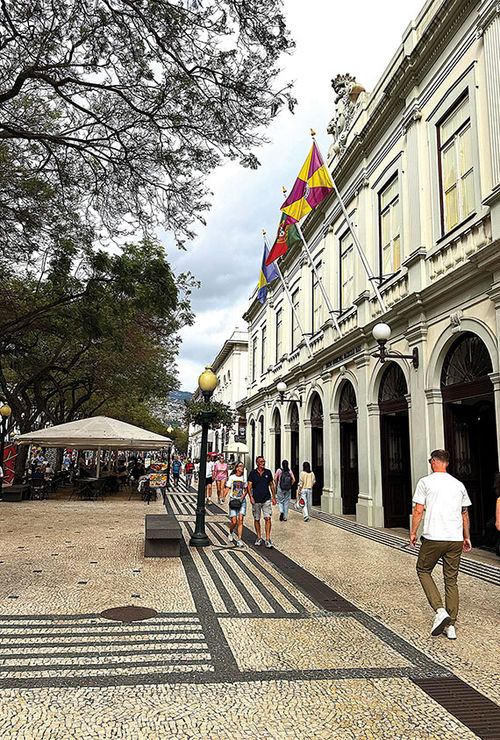
Funchal’s pavements echo the intricate designs found in mainland Portugal. Photo Credit: Arnie Weissmann
While Funchal exudes an air of 19th-century Europe, modern architecture complements its charm. The Royal Savoy Ocean Resort, a contemporary development, enhances the cityscape alongside the Design Centre Nini Andrade Silva, boasting a strikingly modern design near the cruise ship pier. The rooftop restaurant offers breathtaking views and was designated a highlight of my culinary experiences in Funchal, alongside acclaimed establishments like Kampo and Audax, both requiring advanced reservations due to their popularity.
Tourism serves as the pillar of Madeira’s economy, evident even during the off-season. The bustling farmers’ market embodies a tourist-friendly atmosphere, showcasing vibrant displays of produce but lacking novelty for seasoned visitors.
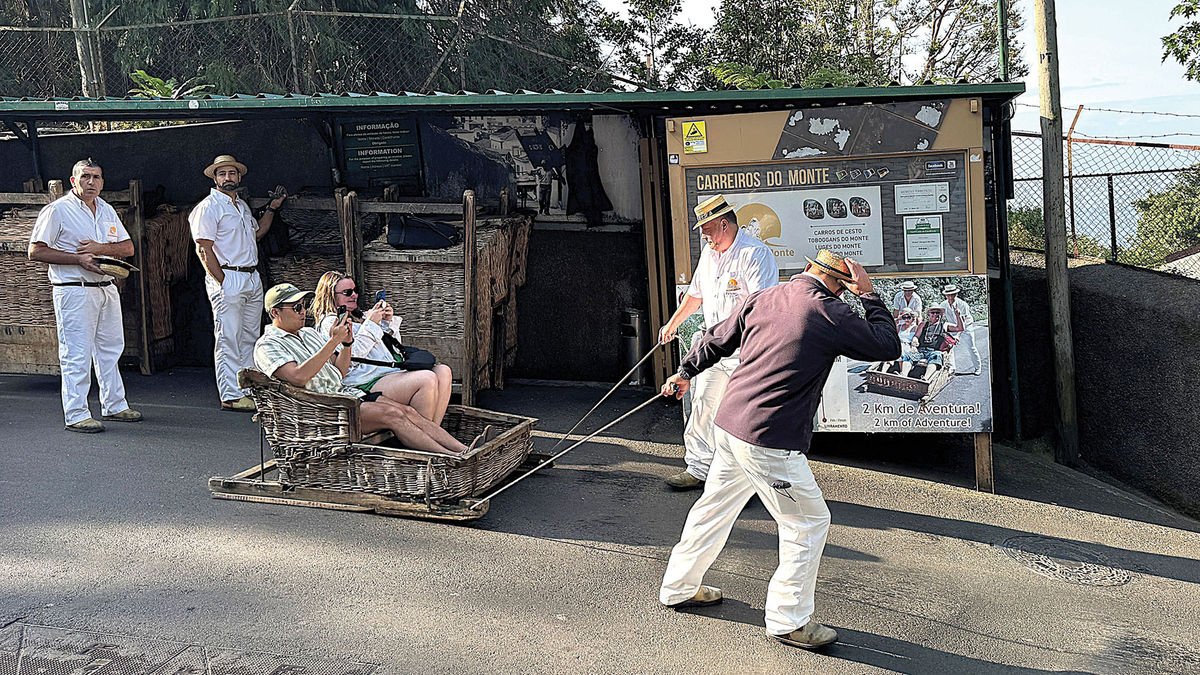
A standout experience awaits at the thrilling attraction of tobogganing. These aren’t ordinary snow toboggans; instead, they are comfortable wicker chairs on wooden runners, skillfully navigated by two men using their sandaled feet to brake as they guide you down the steep streets. This exhilarating ride harks back to the days when wealthy residents descended from their hillside homes into the town. Alternatively, a serene cable car ride offers stunning views of the city and ocean.
Madeira is also famous for its fortified wine, similar to port, produced on the island. Visitors can explore the process and history of this unique beverage at Blandy’s Wine Lodge located in central Funchal.
Exploring Beyond Funchal
A popular day trip destination is Camara de Lobos, located on the southern coast west of Funchal. Esteemed as a favorite of Winston Churchill, who often painted the striking scenery, this picturesque harbor town boasts several excellent restaurants.
Travel further west to visit Cabo Girao, home to a transparent observation deck jutting out from a dramatic 1,900-foot cliff overlooking the ocean.
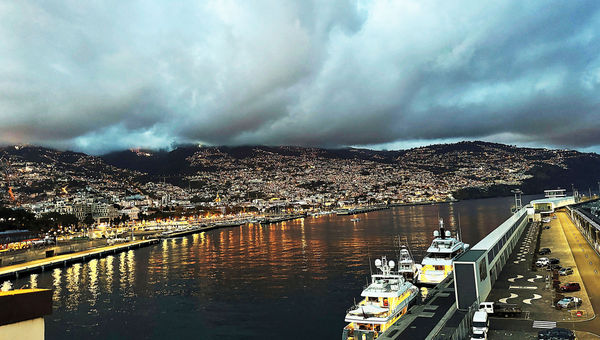
Seen from the rooftop of the Design Centre Nini Andrade Silva, Funchal’s harbor sparkles at dusk. Photo Credit: Arnie Weissmann
One of the island’s greatest joys lies in exploring its less-visited interior, whether through hiking or by hiring a four-wheel-drive vehicle with a knowledgeable driver. The lush landscape offers stunning views, with blooming purple Pride of Madeira flowers alongside vibrant yellow Scot’s Broom. While most of the population resides along the developed southern coastline, the northern black-sand beaches are wider and considerably less crowded.
In conclusion, Madeira’s allure extends beyond its striking “very vertical, very green” landscapes. The island is rich in cultural experiences, culinary delights, and outdoor adventures that beckon exploration, promising exciting new discoveries with each visit.

