

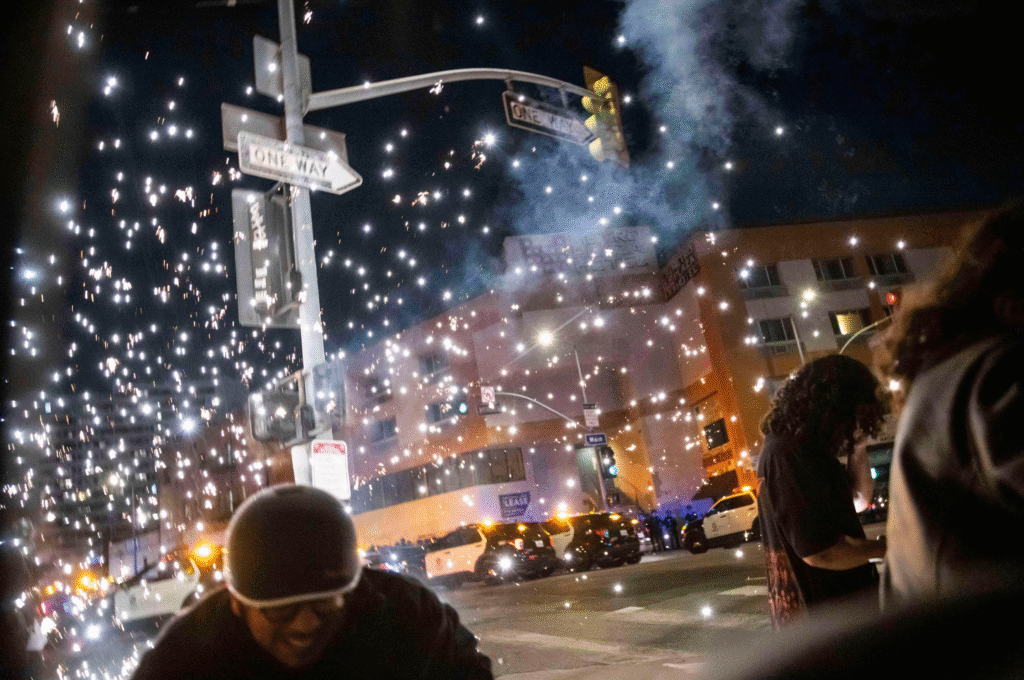
Governor Declares National Guard Deployment Unnecessary Amid Protests
California’s Governor Gavin Newsom has formally requested President Trump to withdraw National Guard troops that were recently deployed to Los Angeles. In a letter sent on Sunday afternoon, Newsom denounced the move as a “serious breach of state sovereignty” while holding discussions with local law enforcement regarding increasing protest activity related to immigration policies.
This deployment marks a significant escalation in the ongoing tensions over immigration enforcement. It is notably the first instance in decades where a state’s National Guard was activated without its governor’s approval, raising concerns about federal overreach in state matters. Governor Newsom, along with Los Angeles Mayor Karen Bass, attributes the growing unrest to the administration’s tactics, suggesting that such actions are politically motivated rather than about public safety.
“The chaos we’re witnessing in Los Angeles has been incited by the administration’s actions,” Mayor Bass stated during an afternoon press conference. She emphasized that the protests are part of a larger agenda, underscoring the need for peaceful demonstrations.
In contrast, LAPD Chief Michel Moore acknowledged that the protests mirrored patterns seen in past civil unrest, typically intensifying on the second and third days. He refuted claims from the Trump administration that LAPD failed to assist during Friday’s immigration raids and clarified that his department was unprepared for such protests, having been unnotified in advance of the federal actions.
Governor Newsom challenged President Trump’s narrative, calling him a “stone cold liar” for claiming that the National Guard was needed to manage unrest in Los Angeles. The governor accused Trump of misunderstanding the situation, pointing out that no discussions of deploying the Guard took place during their Friday phone call.
This back-and-forth did not deter the White House from defending its actions. “It’s a bald-faced lie for Newsom to claim there was no problem in Los Angeles before President Trump got involved,” stated White House spokesperson Abigail Jackson.
Context of Protests and Immigration Raids
The National Guard’s arrival came in the wake of two days of protests that began on Friday and spread to the neighboring cities of Paramount and Compton. The protests were triggered by a series of federal immigration raids throughout the Los Angeles area, which resulted in over 100 arrests. High-profile arrests occurred in various locations, including a Home Depot parking lot, where federal agents targeted immigrant individuals.
The protests were mixed in scale, being smaller than past events that necessitated the National Guard’s involvement, such as the Watts riots or the protests following the Rodney King incident. The last time a National Guard deployment occurred without a state’s governor’s request was in 1965, when federal troops were sent to assist a civil rights march in Alabama.
Federal Government’s Defense of Deployment
President Trump invoked a legal provision that allows the deployment of federal forces when faced with “rebellion or danger of rebellion against the authority of the Government of the United States.” He authorized the presence of 2,000 National Guard members, emphasizing a strong stance against perceived violence in Los Angeles.
While addressing reporters, Trump stated, “We’re going to have troops everywhere. We’re not going to let this happen to our country.” In addition to the National Guard, about 500 Marines stationed at Twentynine Palms were placed on standby, ready for deployment if necessary.
As the situation continues to evolve, the interactions between state and federal authorities will be crucial in determining public safety and the resolution of ongoing protests against federal immigration policy enforcement. The dialogue between Governor Newsom and President Trump may serve as a litmus test for state-federal relations amid emerging civil unrest.
For more information on the context of these protests and the legal framework supporting federal troop deployment, visit Brennan Center for Justice.

