

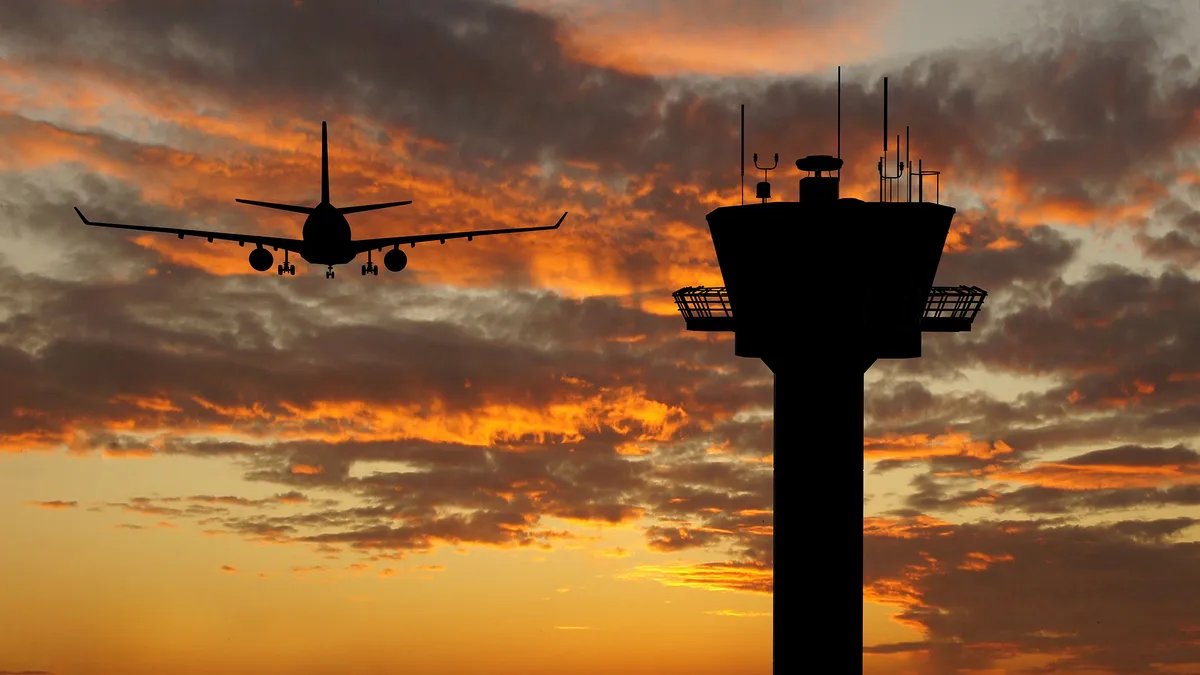
The Federal Aviation Administration (FAA) has announced a significant measure in response to growing concerns over air traffic controller fatigue, specifically citing the ongoing federal government shutdown. Beginning Friday, November 7, the FAA will implement a 10% reduction in airspace flight capacity across 40 high-volume markets.
U.S. Transportation Secretary Sean Duffy has highlighted a notable rise in call-outs by air traffic controllers who are experiencing financial strain as they continue to work without pay during the shutdown. During a press conference, FAA Administrator Bryan Bedford addressed the issue, revealing data compiled from voluntary safety-disclosure reports submitted by airline pilots. This data indicates a concerning increase in fatigue levels among controllers, prompting the FAA to take decisive action.
“The data is telling us we need to do more,” Bedford stated. He assured travelers that the airspace remains safe despite these challenges. However, details regarding the specific number of call-outs among controllers during the current shutdown, which has persisted for 36 days, were not provided. Duffy acknowledged that the same individuals frequently calling out are often the ones reliably reporting for duty. This inconsistency is causing heightened stress among on-duty controllers, who are compelled to assume the responsibilities of absent colleagues.
Potential Flight Cancellations
Bedford indicated that discussions would take place with airlines to manage the capacity cuts effectively. The FAA is advocating for carriers to take proactive measures to reduce their flight schedules systematically. The anticipated impact of these cuts is significant, with estimates suggesting up to 1,800 canceled flights daily, potentially affecting 268,000 seats.
The FAA plans to announce specific markets that will face restrictions after ongoing consultations with aviation stakeholders. These restrictions will apply not only to commercial flights but also other forms of aviation.
Geoff Freeman, CEO of the U.S. Travel Association, remarked that while the FAA’s decision is prudent for maintaining safety in the skies, it will likely lead to fewer available flights, extended delays, and more disruptions for travelers. "All government shutdowns are irresponsible, and this decision highlights the urgent need for reopening the government,” he asserted, attributing strain on the aviation system to Congress’s inaction.
Future Flight Capacity and Controller Performance
Duffy noted that the restoration of airspace capacity is not directly tied to the conclusion of the shutdown but expressed hope for improved controller performance once the government reopens. He also cautioned that if controller fatigue persists, further restrictions on airspace may be introduced.
Current Impact on Air Travel
Interestingly, the FAA’s decision comes at a time when air travel across U.S. airspace has been relatively smooth. A quick analysis from flight data provider Cirium noted that among 19 major airports, only San Francisco recorded a cancellation rate exceeding 1%. The rest reported on-time departure rates above 85%. Among these airports, Newark experienced the highest number of cancellations since November 1, while most have maintained cancellation rates below 0.5%. For context, the ten largest U.S. carriers collectively canceled only 0.7% of their flights this year, with Cirium noting that a rate of 80% for on-time departures reflects an effective aviation system.
Overall, while the FAA’s capacity reductions aim to prioritize safety amid controller fatigue, travelers should prepare for potential changes and disruptions in air travel as the situation evolves.

