

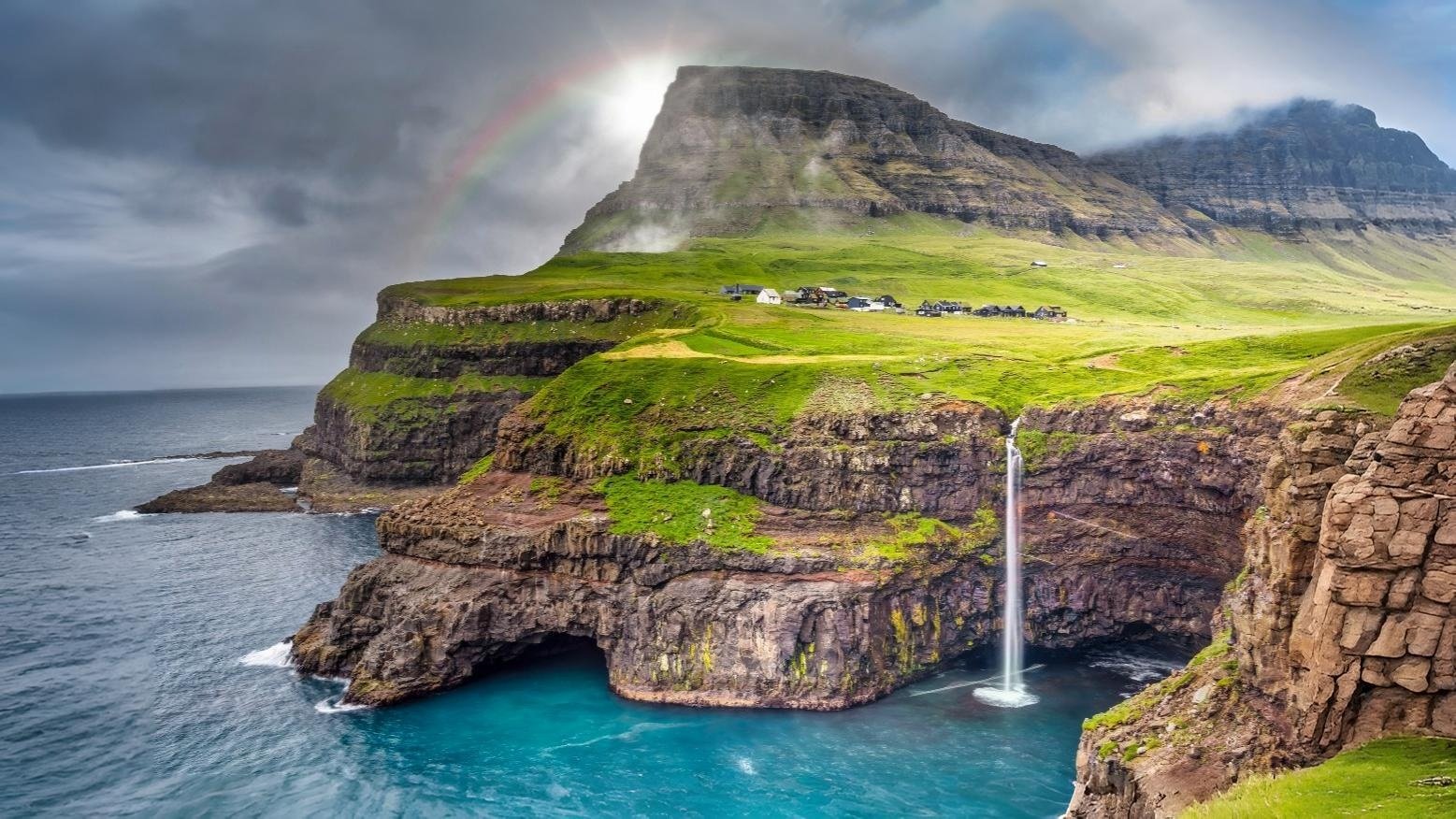
The Faroe Islands are an extraordinary archipelago made up of 18 rugged volcanic islands nestled in the North Atlantic Ocean, strategically positioned between Iceland and Norway. Known for their spectacular sea cliffs, deep fjords, vibrant turf-roofed villages, and thriving seabird colonies, these islands offer a unique destination that feels remote yet is surprisingly accessible from various European cities. With a population of just over 55,000, the culture here is rich, the landscapes remain pristine, and a strong sense of community permeates the region.
Explore Nature’s Untamed Beauty
Adventure-seekers flock to the Faroe Islands to experience nature in its most exuberant form. Activities range from hiking over wind-swept mountains to observing puffins on Mykines and reveling in the tranquil charm of local fishing communities. The Faroese culinary scene is also gaining attention, merging Nordic traditions with locally sourced ingredients including lamb, seafood, and foraged herbs. This balance of adventure, comfort, and authenticity makes the Faroe Islands an appealing choice for travelers.
Best Time to Visit
The climate in the Faroe Islands is notoriously unpredictable. Locals humorously note that one can experience all four seasons within a single day. Each season possesses its own allure, thus the ideal time to visit largely depends on your desired experience:
Summer (June to August): This is the most favored season due to mild temperatures, ranging from 10 to 15 degrees Celsius (50–59°F). The long daylight hours allow for extensive hiking and sightseeing opportunities, alongside vibrant cultural events like Ólavsøka, the National Day celebrated in Tórshavn with music, rowing contests, and parades.
Spring (April and May): A quieter period that offers slightly cooler weather but showcases blooming wildflowers and nesting seabirds.
Autumn (September to October): This season presents stunning golden landscapes, although rain becomes more common, providing solitude without the summer crowds.
- Winter (November to March): The most challenging season, known for short daylight hours and stormy weather, yet it offers moody atmospheres and occasional views of the Northern Lights.
For first-time visitors, late June through early August is the most opportune time to visit due to the ideal balance of accessibility and natural splendor.
Travel Requirements
Traveling to the Faroe Islands is generally straightforward, but understanding the entry requirements is essential. Although part of the Kingdom of Denmark, the islands are neither within the European Union nor the Schengen Zone. Most visitors from the EU, UK, USA, and Schengen countries do not require a visa for stays up to 90 days. It’s advisable to check for the latest visa requirements if you’re traveling from outside Europe.
The local currency is the Faroese króna (DKK), which is linked to the Danish krone. While Faroese banknotes are valid in the islands, they are not typically accepted outside, so it’s wise to spend or exchange them before leaving. Credit cards are widely accepted in hotels, restaurants, and stores, with ATMs available in larger towns. The official language is Faroese, though Danish and English are commonly spoken, facilitating easy communication.
Getting There
Vágar Airport (FAE) serves as the primary gateway to the Faroe Islands. Although small, it boasts modern amenities and is well-connected by an underwater tunnel to Streymoy. Atlantic Airways, IcelandAir, and Scandinavian Airlines operate direct flights from cities such as Copenhagen, Reykjavik, Edinburgh, and Oslo, with flight times typically ranging from one to two hours. However, travelers should expect some variability due to strong winds and varying weather conditions, which can cause delays or cancellations.
For those who prefer to travel by sea, the Smyril Line ferry provides service from Hirtshals in Denmark to Tórshavn, taking around 36 hours and offering a unique way to bring along vehicles.
Getting Around
Once in the Faroe Islands, renting a car is the most practical way to explore. The well-maintained road network enables access to remote villages and scenic coastal routes, though drivers should be cautious of narrow roads and wandering sheep. Public transportation, while reliable and affordable, often requires careful planning as services may be infrequent on weekends.
Helicopter services also provide unique inter-island transportation options, offering breathtaking views, although these flights are largely designed for locals rather than sightseeing. Hiking remains a traditional mode of transportation, with many villages interconnected by historic footpaths.
Inspiration, Highlights & Travel Tips
The Faroe Islands brim with natural wonders and cultural treasures. South of Vágar, Sørvágsvatn Lake provides a stunning optical illusion, while Mykines Island is famed for its vibrant puffin colonies. The village of Gjógv is cherished for its traditional architecture and natural gorge, while Saksun offers a picturesque lagoon framed by towering cliffs.
Tórshavn, recognized as Europe’s smallest capital, is a melding of history and contemporary culture, highlighted by the historic Tinganes district’s timber-framed buildings. The town also features a burgeoning culinary scene, where local chefs showcase Faroese ingredients.
Visitors should prepare for variable weather conditions, respect nature and private property rights, and make advance reservations for accommodations and activities to ensure a smooth trip.
Suggested Itineraries
Maximize your experience in the Faroe Islands with these suggested itineraries:
3-Day Short Escape: Begin your journey in Vágar, exploring Sørvágsvatn Lake and Gásadalur waterfall. Day two can be dedicated to Kilroy’s coastal scenery, while day three allows for a cultural immersion in Tórshavn and a visit to the medieval ruins of Kirkjubøur.
- 7-Day Adventure: This itinerary encompasses a broader range of attractions. Spend the first two days in Vágar and Mykines, followed by a visit to villages like Saksun and Tjørnuvík on day three. A day in Tórshavn for museums and dining, followed by explorations in Eysturoy, Klaksvík, and hiking to Kallur Lighthouse, completes your week.
Recommended Hotels
Accommodations in the Faroe Islands range from charming guesthouses to modern hotels.
- Hotel Føroyar: Nestled above Tórshavn, this establishment offers panoramic views and contemporary Nordic design.
- Hotel Brandan: A newer eco-friendly option known for stylish decor and sustainability.
- Gjáargarður Guesthouse: A cozy family-run guesthouse perfect for exploring the northeast.
Final Thoughts
The Faroe Islands promise not just a travel destination, but a transformative experience. From awe-inspiring cliffs to delicious local meals, each moment spent here connects travelers to the raw beauty of nature and the island’s distinct culture. For those yearning for an adventure filled with authenticity and stunning landscapes, this hidden gem in Europe is certainly worth exploring.
For further travel ideas, consider browsing through additional resources to enhance your visit to the Faroe Islands.

