

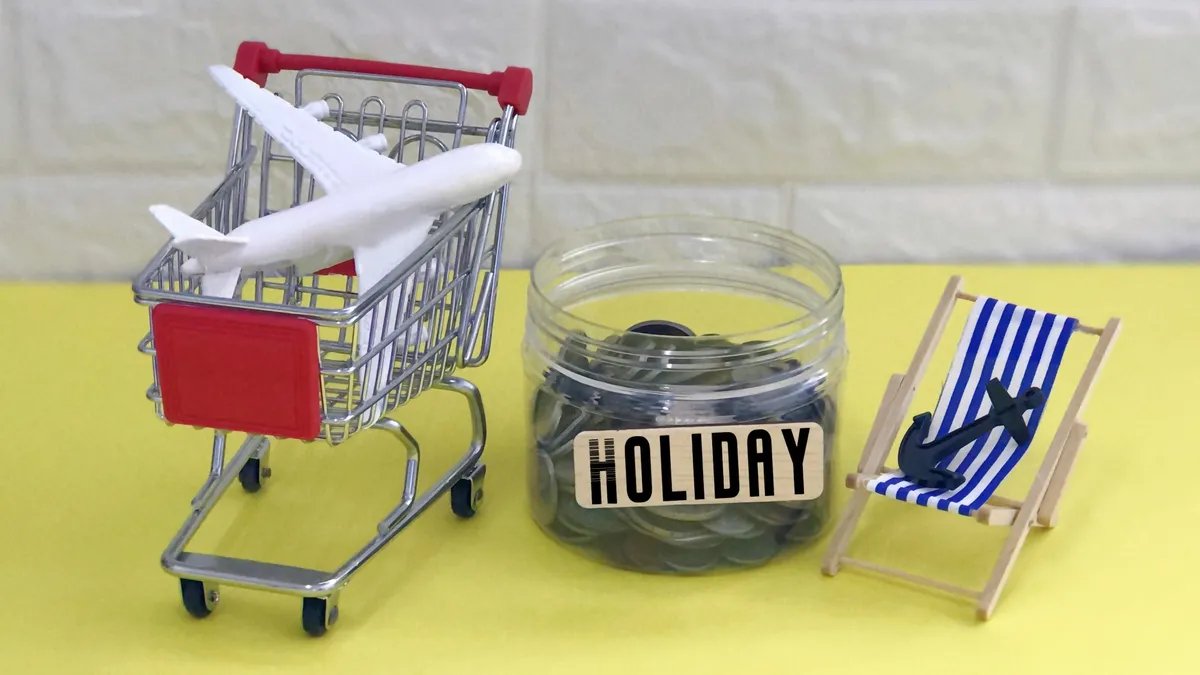
This holiday season marks a significant uptick in American travel plans, with more individuals intending to travel than at any time over the last five years. Yet, a noticeable decrease in spending reveals a shift in travel behavior among various demographics, including high-income households.
Recent insights from [Deloitte](https://www2.deloitte.com/us/en/pages/consumer-business/articles/holiday-travel-survey.html) and [PwC](https://www.pwc.com/gx/en/services/consulting/what-we-do/hospitality-leisure-analytics.html) highlight an emerging trend of reduced spending this holiday travel season. Deloitte’s 2025 Holiday Travel Survey indicated that just over half of Americans (54%) plan to travel between Thanksgiving and mid-January, a record high. However, this season’s travelers are expected to make fewer trips and spend less money than they did last year, with the average number of planned trips decreasing from 2.14 to 1.83, and budgets dropping 18% to $2,334.
This trend correlates with financial challenges, as nearly one in three Americans report their financial situation has worsened compared to a year ago—an increase from one in four in 2024. Notably, high-income families, defined as those earning $100,000 or more annually, have experienced the most significant shift, with 19% feeling financially constrained this year, a jump from 13% in 2024. This data is derived from a survey of approximately 3,900 participants conducted between September 26 and October 3.
Referred to as the “cautious class” by Deloitte, these affluent individuals are prioritizing travel while also being more mindful of their spending. “While people remain committed to traveling, they are tightening their budgets,” noted Kate Ferrara, the national sector leader for transportation, hospitality, and services at Deloitte. “It was surprising to see higher-income travelers active in this pullback.”

Kate Ferrara
This cautious spending mentality is reflected in various travel categories. Usage of hotels has fallen to 59%, down from 62% last year, while domestic flight usage has dropped from 52% to 45%. International flight plans have seen a decrease to 17%, down from 24% the previous year. “Travelers are opting for driving instead of flying, staying with family rather than in hotels, and possibly forgoing upgrades or dining out,” stated Ferrara. “They’re not necessarily avoiding travel; they’re simply more vigilant about their expenses.”
Further corroborating this trend, a survey from [AAA](https://www.aaa.com/) suggests that around 73 million Americans, representing 90% of travelers, plan to drive during Thanksgiving—an increase of 1.3 million compared to last year.
Interestingly, despite the pullback among high-income households, the luxury travel sector remains robust. One in four respondents identified as “luxury travelers,” defined by having stayed at luxury accommodations with nightly rates of $400 or more at least twice in the past two years. According to Deloitte’s research, these travelers are twice as likely to reserve first-class flights.

Jamie Lane
“Even as general travel and spending intentions soften, those passionate about luxury travel will continue to choose high-end accommodations this season,” Ferrara elaborated. “The luxury segment is holding strong.” Meanwhile, insights from PwC reveal a 1% year-over-year increase in travel and entertainment spending, a figure that seems stagnant when adjusted for inflation.
Jonathan Kletzel, a leader in PwC’s travel sector, indicated that this year’s spending trends reflect a “reset or cooling-off period,” rather than substantial growth compared to past holiday seasons. “Consumers express a continued desire to travel, but are more cautious about how far their dollars will stretch,” he noted.
The pullback appears to be especially pronounced among Gen Z travelers, with only 55% planning to travel in 2025, a decrease from 61% last year. Half of those choosing to stay home cite expenses as a primary reason. However, Kletzel emphasized that the shift toward budget-friendly options isn’t restricted to any one generation. “Among all age groups, consumers are seeking value,” he stated. “While most travelers are taking their trips, they’re opting for more affordable options or cutting out extra expenses that can add up.”
This trend opens doors for value-oriented travel experiences during the holidays. Regional destinations and road trips are expected to see increased interest. For instance, vacation rentals are already experiencing a surge this season. Data from [AirDNA](https://www.airdna.co/) indicates that Thanksgiving bookings are up 7% to 9% over last year, with notable increases in drive-to leisure markets such as Orlando and Austin, Texas. Similar trends are observed for bookings around Christmas and New Year’s, with increases of 12% to 21% compared to the previous year.
One reason travelers are leaning toward short-term rentals is affordability. Jamie Lane, chief economist at AirDNA, explained, “Typically, families opt for single rentals to avoid the cost of multiple hotel rooms.” Additionally, the convenience of preparing meals in a vacation home, made possible by a fully equipped kitchen, offers a budget-friendly alternative to dining out during holiday gatherings.
“Having a kitchen makes it easier to cook meals during celebrations, making vacation homes far more practical than hotels for families during this festive season,” Lane concluded.

