

Billy Bishop Airport Expansion Receives Prime Minister Carney’s Full Support
In a decisive move that could reshape Toronto’s aviation landscape, Prime Minister Mark Carney has officially endorsed Premier Doug Ford’s ambitious Billy Bishop Airport expansion plans. The announcement, made at a construction site event in Etobicoke, marks a significant milestone for one of Canada’s most strategically positioned urban airports and signals potential major changes for travelers in the Greater Toronto Area.
Carney and Ford’s Joint Vision for Aviation Growth
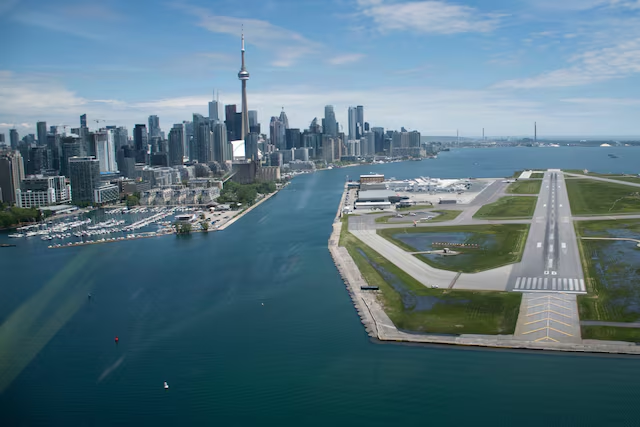
Ford’s comprehensive proposal centers on extending Billy Bishop Airport’s runway to accommodate larger commuter jets, a transformation that would fundamentally alter the airport’s operational capacity. Currently, Billy Bishop Toronto City Airport (YTZ) primarily serves turboprop aircraft and smaller regional jets, limiting its ability to offer direct flights to major North American destinations.
The Premier’s vision extends beyond simple runway expansion, encompassing upgraded terminal facilities, enhanced ground transportation connections, and modernized air traffic control systems. Ford believes that transforming Billy Bishop Airport expansion into a full-service commuter hub is essential for maintaining Toronto’s competitive edge in the North American aviation market. The federal-provincial collaboration has emphasized the strategic economic benefits such expanded operations would deliver to both local and national economies.
Navigating Complex Governance Challenges
The governance structure surrounding Billy Bishop presents unique challenges that complicate the expansion process. The airport operates under a historic tripartite agreement involving Toronto City Council, the federal government, and PortsToronto, creating multiple layers of approval requirements for any significant modifications.
Ford’s proposal to potentially shift jurisdictional control away from Toronto has generated considerable controversy among municipal leaders. Mayor Olivia Chow has publicly criticized what she terms Ford’s ‘unilateral’ approach to the Billy Bishop Airport expansion, arguing that the city should retain significant input in decisions affecting its waterfront and downtown core. However, Chow acknowledges Carney’s influential role in facilitating productive discussions between all stakeholders.
Carney has emphasized the collaborative nature of the planning process, stating that any successful expansion must balance federal transportation priorities, provincial economic development goals, and municipal concerns about noise, traffic, and environmental impact.
Safety Standards and Infrastructure Upgrades
Beyond the headline-grabbing runway extension, the Billy Bishop Airport expansion plan includes critical safety infrastructure improvements mandated by federal aviation authorities. These upgrades, which must be completed by July 2027 according to Transport Canada guidelines, encompass enhanced runway lighting systems, upgraded emergency response facilities, and improved weather monitoring equipment.
The safety improvements represent a substantial investment in the airport’s long-term viability, ensuring that expanded operations meet the highest international aviation standards. Industry experts note that these foundational upgrades are prerequisites for accommodating the larger aircraft types that would make Billy Bishop a more attractive option for major airlines.
Transformative Implications for Toronto Travelers
For Toronto’s traveling public, a successfully expanded Billy Bishop Airport could dramatically improve connectivity options. The downtown airport’s proximity to Toronto’s financial district and urban core provides significant time savings compared to the journey to Toronto Pearson International Airport, located in the suburban northwest.
Aviation industry analysts project that an expanded Billy Bishop could accommodate direct flights to major U.S. business centers, including Boston, Washington D.C., and potentially transcontinental routes to Los Angeles and San Francisco. This expanded route network would particularly benefit business travelers and could stimulate tourism by making Toronto more accessible to visitors from key markets.
The Billy Bishop Airport expansion also promises to relieve pressure on Pearson International, which has faced capacity constraints and passenger experience challenges in recent years. Distributing traffic between multiple airports could improve overall system efficiency and passenger satisfaction across the region.
While Carney has cautioned against premature decisions, emphasizing that thorough environmental and economic impact assessments must be completed, the federal support signals strong momentum for the project. As stakeholders continue negotiations, the Billy Bishop Airport expansion represents a defining moment for Toronto’s transportation infrastructure and its position as a major North American gateway city.

