

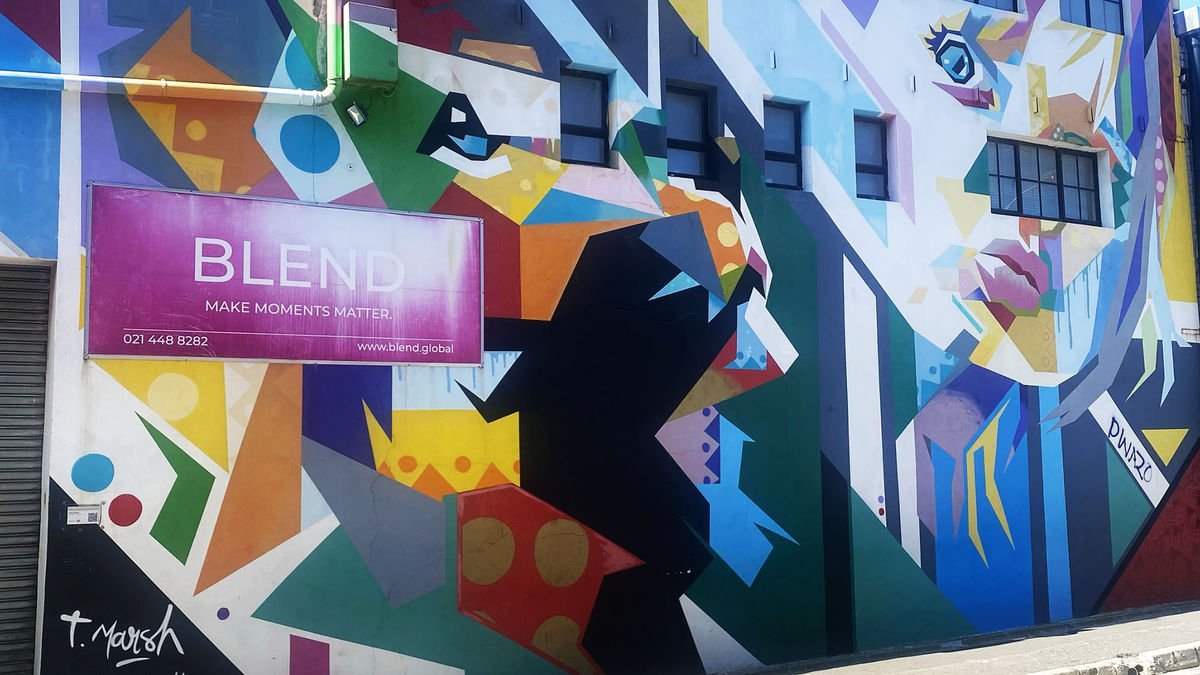
Salt River: A Unique Perspective on Cape Town’s Street Art
Upon arriving in Salt River, a neighborhood on the outskirts of Cape Town’s main tourist attractions, the landscape appeared a bit unpolished. The buildings, often weathered with peeling paint, seemed to tell stories of a vibrant past, while the uneven sidewalks required careful navigation. Initially, it might be easy to overlook the area’s hidden gems, but this is where the story of Winston Fani, South Africa’s pioneering blind tour guide, comes to life.
Meeting Winston was a delight. With a warm smile, he welcomed visitors to what he affectionately called his “office.” As the tour commenced, Winston shared insights that revealed the hidden narratives woven into the street art adorning the walls. “Most people walk past these walls every day and see nothing,” he remarked, emphasizing that every mural speaks volumes.
Experiencing Street Art Through Sound
As the tour progressed, Winston’s ability to convey the essence of each mural was captivating. He described a vibrant mural celebrating South Africa’s diverse culture, drawing particular attention to a depiction of inclusivity featuring a woman in a wheelchair working alongside her peers. “Inclusivity,” he said firmly, “is real strength.”
Winston’s connection to the local art community was evident. He shared personal stories about various artists he met at a now-closed art studio that once served as a creative hub. His favorite piece, a striking mural titled “Man with Dreadlocks,” depicts a half-robot, half-human figure crafted from bushes. “Nature is still the best technology,” he explained, signifying humanity’s enduring mastery over creations.
In an innovative approach, Winston augmented the experience for blind visitors. At each mural, he would touch a small plaque embedded with braille that he crafted himself, containing descriptions of the art along with QR codes. “I met each artist, learned about their work, and translated it into something I could understand,” Winston noted, highlighting his dedication to inclusivity. By scanning these codes, visitors could listen to his detailed descriptions, which included emotions evoked and historical context.
A Remarkable Journey Through History
The tour continued to unveil layers of history that many overlook. At Community House, an establishment with a rich backdrop as a former residence for white women seeking employment in the 19th century and later a stronghold for the Communist Party, Winston pointed out a mural commemorating the Marikana massacre of 2012. Another poignant mural depicted Imam Haron, an anti-apartheid activist whose tragic death in police custody in 1969 left scars on the nation’s collective memory.
As Winston moved through the area, he showcased art that captured the poignant moments of South African history, such as a mural illustrating a newspaper front page announcing Nelson Mandela’s release from prison. The artistry conveyed that during apartheid, poignant narratives were often cloaked in anonymity, captured through outlines rather than faces.
Sharing Personal Stories and Dreams
Beyond the art and history, Winston shared poignant insights from his own life—from his journey to becoming a tour guide to the love story with his wife, who also navigates the world without sight. Surpassing the barriers many faced in the tourism sector, he became the first visually impaired guide certified by the Tourist Guide Institute in South Africa. “Most tourism institutions wouldn’t accept me because I’m blind,” he reflected, adding that perseverance led him to work alongside a mentor who believed in his vision.
The inception of his tours began almost by chance when a friend jokingly suggested he should lead them. This planted the seed for Winston’s dream of working in tourism, which he passionately pursued until it blossomed into reality.
A Vision for the Future
As the tour drew to a close, Winston highlighted a mural of a rhinoceros adorned with the simple yet profound words, “All we need is love.” He expressed concern over the plight of rhinos, emphasizing the need for conservation efforts. “Now we only have one species left,” he lamented, an ironic reminder of a future potentially devoid of beauty when the appreciation of nature transcends sight.
Despite the challenges of disappearing artworks due to urban development, Winston remains optimistic about expanding his offerings. Plans are underway to introduce a gin tasting experience to complement the existing wine tours, enhancing the sensory journey for all visitors.
Reflecting on the tour, Salt River transitioned from an overlooked area into a vibrant tapestry of stories, art, and history. Winston Fani’s captivating insights transformed a simple walk into a deep exploration of culture and resilience, offering a perspective of Cape Town that many visitors might otherwise miss.

