

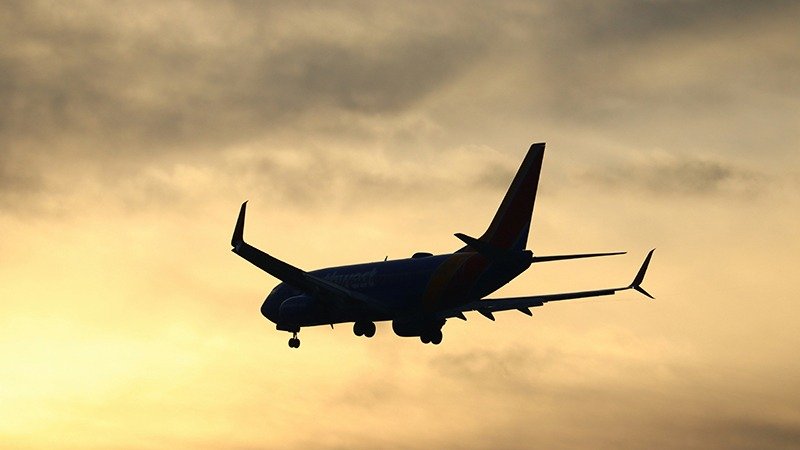

The ongoing U.S.-China trade war has taken a significant turn as China halts deliveries of Boeing’s 737 Max jets. Recent reports indicate that the Chinese government is urging its airlines to cease purchasing all American aircraft parts and equipment, marking a challenging phase for the aerospace giant.
Currently, approximately 10 Boeing 737 Max aircraft are poised to enter Chinese airline fleets, with allocations set for major carriers such as China Southern Airlines, Air China, and Xiamen Airlines. Some of these aircraft are stationed near Boeing’s production facility in Seattle, while others are undergoing final preparations in Zhoushan, China, as outlined by a Bloomberg report.
Impact of Tariffs on Deliveries
Under the new tariff regulations, certain planes might still be allowed to enter China if all necessary delivery paperwork and payments were finalized prior to the implementation of China’s reciprocal tariffs, which reached 125% on April 12. Conversely, U.S. tariffs of 145% have been imposed on Chinese goods, complicating the situation further.
In addition, Ryanair’s CEO Michael O’Leary has voiced potential delays in the delivery of 25 Boeing aircraft, expressing concerns over tariffs that could affect the airline’s financial strategy. He indicated that the delivery schedule, initially set for August 2025, might be pushed back to March or April 2026 if tariffs remain in effect. “We might delay them and hope that common sense will prevail,” O’Leary stated during an interview with the Financial Times.
Market Repercussions for Boeing
The fallout from these developments has resulted in a significant decline for Boeing, with the company’s stock plummeting roughly 6% since early April. Notably, around 70% of Boeing’s commercial airplane sales rely on international customers, heightening concerns about its financial outlook amidst the unfolding trade disputes.
Airbus Faces Challenges Amid Tariff Uncertainty
The ripple effect of these tariffs extends beyond Boeing, as European competitor Airbus also grapples with potential fallout. Delta Air Lines CEO Ed Bastian revealed plans to defer the delivery of 34 Airbus jets due by the end of 2025, stating unequivocally, “We will not be paying tariffs on any aircraft deliveries.” This stance has led Delta to withdraw its financial forecasts for 2025 due to escalating uncertainty in global trade practices, which has a direct impact on the aviation sector.
In light of these developments, airlines and manufacturers alike are left to grapple with the question of who will ultimately bear the cost of these tariffs. As aviation supply chains are intricately linked across borders, the consequences could reshape the industry landscape.

