

MSC Cruises is making waves in the cruise industry with its latest sustainability achievements, reaching significant decarbonization milestones well ahead of schedule. The release of its 2025 Sustainability Report reveals that the cruise line has successfully met the International Maritime Organization’s (IMO) carbon intensity reduction targets for 2030—a remarkable five years early. This achievement positions MSC as a frontrunner in sustainable cruising and demonstrates the company’s unwavering commitment to environmental stewardship.
Pioneering Decarbonization Through Strategic Innovation
The Executive Chairman of MSC Group’s Cruise Division, Pierfrancesco Vago, emphasized the company’s holistic approach to sustainability: “We are advancing our energy transition while investing in our people, strengthening relationships with communities, and taking a more structured approach to biodiversity. I am proud of our progress, and this year’s report shows our commitment is unwavering as our business grows.”
Meeting the IMO’s carbon intensity reduction targets ahead of schedule represents more than just regulatory compliance—it signals a fundamental shift in how cruise lines can operate responsibly while maintaining growth. This achievement is part of MSC’s comprehensive Energy Transition Plan, which aims for net-zero greenhouse gas emissions by 2050, setting a new standard for the entire cruise industry.
Fleet Modernization Drives Environmental Progress
Central to MSC’s sustainability strategy is its ambitious fleet modernization program. The introduction of the MSC World America marks a significant milestone as the third vessel in their innovative line of LNG-powered ships equipped with advanced dual-fuel engines. This cutting-edge technology reduces emissions by up to 20% compared to conventional marine fuel, while also eliminating sulfur oxide emissions entirely.
The impact extends beyond individual vessels, as MSC plans to equip all future ships in both its MSC Cruises and Explora Journeys fleets with this clean technology. Industry analysts predict this commitment could influence other cruise lines to accelerate their own fleet modernization programs, creating a ripple effect across the maritime tourism sector.
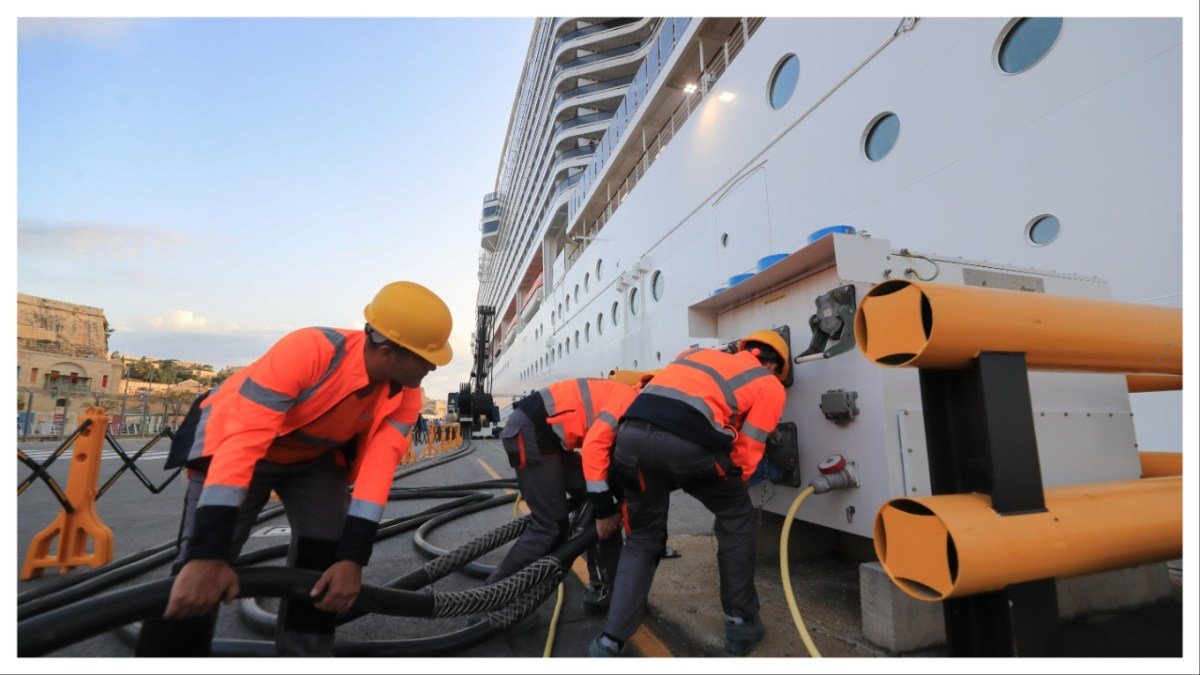
Shore power technology represents another breakthrough in MSC’s environmental initiatives. The company achieved 217 successful shore power connections in 2025, allowing ships to plug into local electrical grids while docked instead of running diesel engines. This innovation dramatically reduces port emissions and noise pollution, directly benefiting coastal communities that host cruise operations.
Marine Conservation and Biodiversity Protection
Beyond carbon reduction, MSC’s sustainability efforts encompass comprehensive biodiversity protection measures. The company has implemented sophisticated whale strike mitigation systems and adjusted shipping routes through environmentally sensitive marine areas. These initiatives are supported by extensive crew training programs that ensure consistent implementation of conservation protocols across the entire fleet.
The crown jewel of MSC’s conservation efforts is the marine conservation facility at Ocean Cay MSC Marine Reserve, officially recognized as a Hope Spot by Mission Blue. This 95-square-mile protected area serves as both a cruise destination and a living laboratory for marine research and restoration. The facility actively participates in coral restoration projects and marine life monitoring, providing guests with educational experiences while contributing to ocean conservation.
Community Partnerships and Economic Impact
MSC’s sustainability approach extends to supporting local economies in cruise destinations through strategic partnerships and responsible tourism practices. The company works closely with port communities to ensure cruise operations provide meaningful economic benefits while minimizing environmental impact. These initiatives include sourcing local products, supporting artisan communities, and investing in port infrastructure improvements.
Industry Implications and Future Outlook
MSC’s early achievement of carbon reduction targets sends a powerful message to the cruise industry about the feasibility of ambitious environmental goals. As travelers increasingly prioritize sustainable tourism options, MSC’s initiatives position the company to capture environmentally conscious cruise passengers while setting new benchmarks for responsible operations.
Looking ahead, MSC’s commitment to net-zero emissions by 2050 will likely accelerate innovation in marine technologies, from advanced biofuels to hydrogen propulsion systems. The company’s success in meeting today’s targets while maintaining operational excellence provides a roadmap for the entire cruise industry’s transition to sustainable operations, proving that environmental responsibility and business growth can successfully coexist in modern maritime tourism.

