

Porter Airlines New Routes Announced for Summer 2026 Expansion
Porter Airlines has unveiled an ambitious expansion strategy for summer 2026, marking the most significant growth phase in the Canadian carrier’s history. The Porter Airlines expansion includes the launch of multiple new routes and substantial increases in flight frequency across both Canada and the United States, representing a bold 20% growth in the airline’s overall network. This comprehensive expansion positions Porter as one of the fastest-growing airlines in North America, with Nashville emerging as a flagship new destination alongside enhanced Boston services.
The announcement comes at a pivotal time for the aviation industry, as airlines continue to recover and expand beyond pre-pandemic levels. Porter’s strategic expansion reflects growing consumer demand for premium travel experiences at competitive prices, particularly on cross-border routes between Canada and the United States.
Nashville Takes Center Stage in Porter Airlines Expansion
The crown jewel of Porter’s summer 2026 expansion is the introduction of daily flights from Toronto City Airport (YTZ) to Nashville International Airport, commencing May 11, 2026. This strategic move marks Porter’s entry into the vibrant Tennessee market, connecting Canadian travelers directly to Music City’s thriving entertainment, culinary, and business sectors.
Nashville’s selection as a new destination reflects careful market analysis and growing demand from Canadian travelers seeking authentic American cultural experiences. The city’s booming tourism industry, world-class music scene, and emerging tech sector make it an attractive proposition for both leisure and business travelers. Industry experts predict that this route will capture significant market share from connecting flights through major hubs, offering passengers the convenience of direct service with Porter’s signature premium economy experience.
The Nashville route represents more than just another destination—it symbolizes Porter’s commitment to identifying underserved markets where its unique value proposition can thrive. By offering direct service from Toronto’s convenient downtown airport, Porter eliminates the need for travelers to navigate larger, more congested airports while providing competitive journey times and superior onboard experiences.
Boston Services Expand with Dual-Hub Strategy
Porter’s approach to Boston exemplifies the airline’s sophisticated network planning, with services launching from two strategic Canadian hubs. The dual-hub strategy includes an impressive 14 weekly flights from Toronto Pearson International Airport and 7 weekly flights from Montréal, both commencing May 14, 2026.
This Boston expansion addresses the significant business and leisure travel demand between eastern Canada and New England’s largest city. Boston’s prominence as an educational, medical, and technology hub creates year-round demand for business travel, while its rich history and cultural attractions ensure strong leisure traffic throughout the summer months.
The decision to serve Boston from both Toronto Pearson and Montréal demonstrates Porter’s nuanced understanding of market dynamics. Toronto Pearson provides access to Canada’s largest metropolitan area and extensive connecting opportunities, while Montréal service caters to Quebec’s substantial francophone population and the city’s growing technology and aerospace sectors.
Network Growth Reflects Industry Leadership
Andrew Pierce, Vice President of Network Planning and Reporting at Porter Airlines, emphasized the historic nature of this expansion, stating: “We are making a substantial increase in flights for Porter this summer, touching on every region we fly to.” This 20% network growth represents the fastest expansion rate achieved by any North American airline in the current market cycle.
The expansion strategy reflects Porter’s data-driven approach to network planning, utilizing advanced analytics to identify opportunities where the airline’s unique positioning can capture market share. Unlike traditional low-cost carriers that compete primarily on price, or full-service airlines that focus on premium passengers, Porter occupies a distinctive middle ground offering elevated economy experiences at competitive prices.
Industry analysts note that Porter’s expansion timing is particularly astute, as it coincides with increased consumer confidence in air travel and growing demand for premium experiences. The airline’s focus on underserved city pairs and convenient airports positions it well to capture travelers seeking alternatives to traditional hub-and-spoke routing through congested major airports.
Frequency Enhancements Across Existing Routes
Beyond new destinations, the Porter Airlines expansion includes significant frequency increases on popular existing routes, demonstrating the airline’s commitment to serving growing demand across its network. The Ottawa-Winnipeg route will see a substantial increase from 7 to 12 weekly flights, reflecting strong demand for transcontinental service within Canada.
The Hamilton-Halifax route represents perhaps the most dramatic frequency enhancement, doubling from 7 to 14 weekly flights. This increase acknowledges the growing importance of Hamilton as an alternative to Toronto Pearson for Golden Horseshoe area travelers, while Halifax continues to grow as Atlantic Canada’s primary business and leisure hub.
These frequency enhancements are particularly significant in the Canadian market, where geographic distances and limited competition on many routes create opportunities for airlines that can offer convenient schedules and superior service. Porter’s decision to increase frequencies rather than simply add new routes demonstrates confidence in existing market performance and commitment to deepening its presence in established markets.
The strategic frequency increases also reflect changing travel patterns, with business travelers increasingly valuing schedule flexibility and leisure travelers seeking convenient departure times. By offering multiple daily or weekly options on key routes, Porter positions itself to capture a larger share of time-sensitive business traffic while accommodating diverse leisure travel preferences.
Summer Seasonal Services Extend Warm-Weather Appeal
Recognizing the strong Canadian demand for warm-weather destinations, Porter is extending popular seasonal routes throughout summer 2026. The Sun Destination Network includes flights from Toronto Pearson to tropical hotspots, including Cancun, Costa Rica, and Nassau, catering to Canadian travelers’ enduring appetite for beach vacations and warm-weather escapes.
The seasonal expansion strategy acknowledges the cyclical nature of Canadian travel demand, with winter months driving strong southbound leisure traffic and summer months seeing increased domestic and northern travel. By maintaining year-round service to popular sun destinations, Porter captures both the traditional winter escape market and the growing trend of summer warm-weather travel.
Hamilton’s inclusion in the seasonal network with Fort Lauderdale service demonstrates Porter’s commitment to developing secondary airport markets. Hamilton’s location in the heart of southern Ontario’s population corridor makes it an attractive alternative for travelers seeking to avoid Toronto Pearson’s congestion, while Fort Lauderdale’s proximity to cruise ports and beach destinations creates natural demand synergies.
Ottawa’s continued Cancun service reflects the capital region’s strong travel demand and Porter’s successful penetration of government and business travel markets. The route’s popularity demonstrates how strategic route planning can create sustainable leisure markets even from business-focused airports.
Premium Aircraft Experience Defines Service Standard
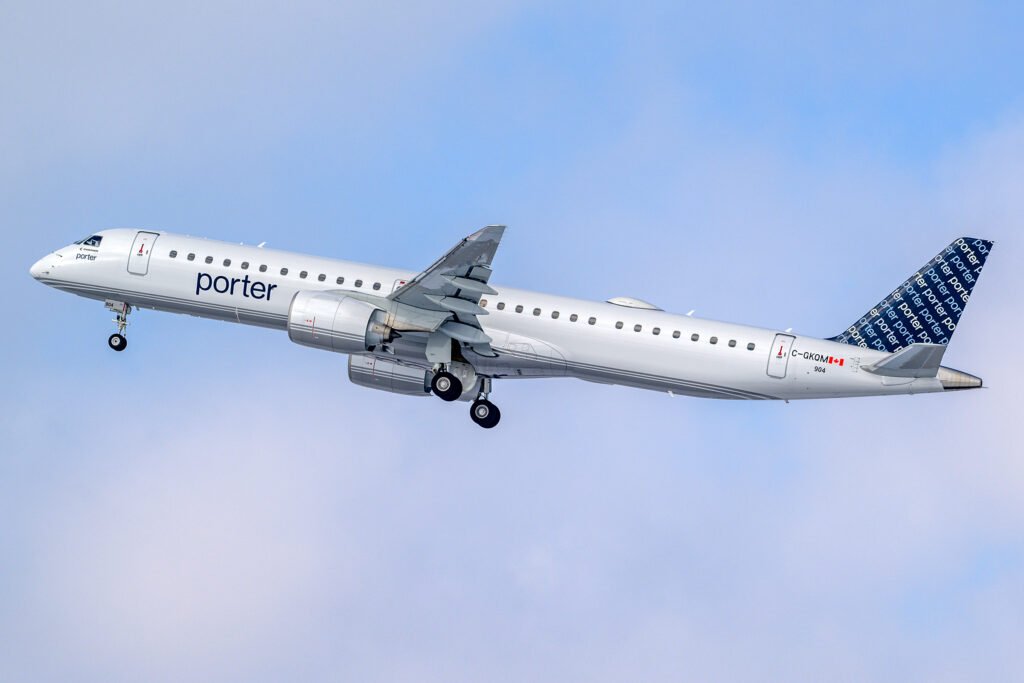
All new Porter Airlines expansion routes will utilize the airline’s modern Embraer E195-E2 aircraft, ensuring consistency in the premium experience that has become Porter’s signature offering. The aircraft configuration eliminates middle seats entirely, providing every passenger with either a window or aisle seat—a unique selling proposition in the North American market.
The onboard experience includes complimentary beer and wine served in glassware, premium snacks, and free high-speed WiFi throughout the flight. These amenities, typically associated with full-service carriers or premium cabin classes, are provided to all passengers as part of Porter’s elevated economy concept.
The Embraer E195-E2’s operational characteristics perfectly align with Porter’s network strategy, offering excellent fuel efficiency for medium-haul routes while providing passenger comfort that exceeds typical regional aircraft standards. The aircraft’s range capabilities enable Porter to serve all planned new destinations efficiently while maintaining the operational flexibility to adjust schedules based on demand patterns.
Porter’s commitment to fleet consistency ensures that passengers receive the same premium experience regardless of their chosen route, building brand loyalty and justifying the airline’s premium pricing strategy. This approach contrasts with many competitors who operate multiple aircraft types with varying service levels.
Market Implications and Competitive Landscape
The Porter Airlines expansion arrives at a crucial time in the North American aviation market, as airlines compete intensively for market share in recovering post-pandemic travel demand. Porter’s unique positioning between traditional low-cost carriers and full-service airlines creates opportunities to capture passengers from both segments.
The expansion particularly challenges established carriers on key routes where Porter’s convenient airport access and premium service can command price premiums. On routes like Toronto-Nashville and Toronto-Boston, Porter’s downtown Toronto City Airport location provides significant time savings for business travelers compared to Pearson-based competitors.
Industry experts note that Porter’s expansion strategy focuses on routes where its operational advantages—convenient airports, superior service, competitive pricing—can overcome the scale advantages of larger competitors. This targeted approach has historically proven successful for the airline and suggests continued market share growth potential.
The timing of the expansion also positions Porter to benefit from continued business travel recovery and evolving corporate travel policies that increasingly emphasize employee experience and convenience over pure cost savings.
Economic Impact and Tourism Benefits
The Porter Airlines expansion creates significant economic benefits for both Canadian and American cities served by the new routes. Nashville’s addition to Porter’s network provides new opportunities for Canadian tourism and business investment in Tennessee, while facilitating American access to Toronto’s diverse attractions and business opportunities.
Boston’s enhanced connectivity with both Toronto and Montréal strengthens existing economic ties between eastern Canada and New England, supporting sectors from education and healthcare to technology and finance. The increased frequency provides businesses with greater scheduling flexibility while reducing travel costs through competitive pricing.
For Canadian airports, particularly Hamilton and Toronto City Airport, the expansion drives increased passenger traffic, supporting local employment and economic activity. The ripple effects extend to hotels, restaurants, ground transportation, and other tourism-related businesses in both origin and destination markets.
Future Outlook and Strategic Vision
The summer 2026 Porter Airlines expansion represents just the beginning of what industry observers expect to be continued aggressive growth from the Canadian carrier. The airline’s successful formula of convenient airports, premium service, and competitive pricing has proven scalable across diverse markets and distance ranges.
Looking ahead, the expansion creates platform opportunities for further growth, with new destinations potentially serving as stepping stones to additional markets. Nashville’s success could justify expansion to other southeastern U.S. destinations, while Boston’s dual-hub strategy might be replicated in other major American markets.
The airline’s commitment to maintaining service quality while scaling operations will be crucial to long-term success. Porter’s ability to preserve its distinctive culture and service standards while growing rapidly will largely determine whether the Porter Airlines expansion strategy achieves its ambitious goals.
As summer 2026 approaches, travelers can anticipate enhanced options, improved schedules, and continued innovation from an airline that has consistently defied conventional industry wisdom. The full schedule details available on flyporter.com promise exciting opportunities for both frequent business travelers and leisure passengers seeking elevated travel experiences at reasonable prices.
Sources
Information for this article was compiled from Porter Airlines official announcements, industry reports, and market analysis from aviation industry experts. Schedule details and service information are based on Porter Airlines’ official communications and website updates.

