

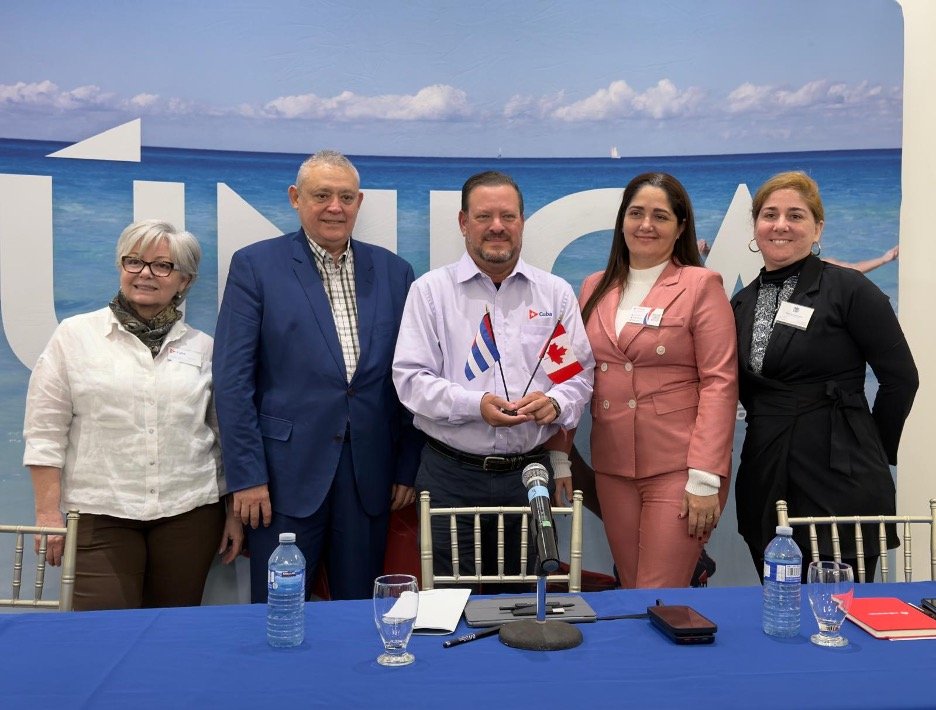
Cuba’s Ministry of Tourism reiterated this week that the country continues to operate normally, reaffirming stability across its tourism sector as questions circulate internationally around fuel supply and public health.
Speaking during a press conference in Toronto on Wednesday (Jan. 14), Lessner Gomez, Marketing Director at the Ministry of Tourism and former head of the Cuba Tourist Board in Toronto, acknowledged that recent media coverage and social conversations have led to increased scrutiny of Cuba as a travel destination, particularly around fuel sourcing. He was clear, however, that these concerns do not reflect the current reality on the ground.
“The message is simple,” Gomez stated. “Cuba is operating normally. It is business as usual.”
Canada Remains Cuba’s Strongest Tourism Market
Canada remains Cuba’s largest and most reliable source market, accounting for more than 40% of all international arrivals. According to Gomez, early indicators for 2026 show positive momentum, with Canadian arrivals up 17% year-over-year in the first days of January alone.
Currently, an average of 120 flights per week arrive in Cuba from Canada, serving all major destinations across the island. Varadero remains the most popular choice for Canadians, followed closely by the northern keys, including Cayo Santa María, Cayo Coco, and Cayo Guillermo. Direct flights are also operating to Havana and Cayo Largo.
Cuba is targeting one million Canadian visitors in 2026, a notable increase from approximately 720,000 Canadians in 2025, reflecting continued confidence from travelers and the travel trade alike.
Fuel Supply Secured Through Multiple International Agreements
Addressing concerns around fuel availability, Gomez emphasized that Cuba does not rely exclusively on Venezuela. The country maintains active fuel contracts with several international partners, ensuring continuity across all critical sectors, including tourism.
Resorts, airports, airlines, and tourism-related infrastructure have confirmed they have sufficient fuel to support winter and summer operations, as well as long-term contractual needs. Aviation fuel, Gomez added, has never depended on Venezuelan oil due to its heavy composition, and flights inbound and outbound of Cuba continue without interruption.
Canadian airlines operating in Cuba have also received formal guarantees confirming fuel availability for scheduled operations.
Resort Infrastructure and Power Supply Remain Stable
While Cuba continues to modernize its national electrical grid, tourism zones operate on separate power systems. Resort areas, particularly in the keys and major tourism hubs, are supported by independent grids and on-site generators.
As a result, power outages affecting residential areas do not impact resort operations. In many cases, travelers staying at resorts are unaware that outages are occurring elsewhere in the country

Cuba is also accelerating its investment in renewable energy, particularly solar power. New hotel developments are required to integrate renewable energy solutions, and some properties, such as the Melia in Trinidad, already operate with up to 80% solar-generated power.
Public Health Measures in Place Across Tourism Areas
Gomez also addressed questions related to mosquito-borne illnesses, confirming that reported cases of Dengue, Chikungunya, and Oropouche are trending downward, according to the Ministry of Health.
Resort areas are subject to ongoing spraying and pest-control programs, coordinated by the Ministry of Tourism. Importantly, the mosquito species responsible for transmission primarily inhabit inland mangrove areas, not resort zones.
Officials emphasized that mosquito advisories are common across tropical destinations globally and are not unique to Cuba.
Tourism Product Continues to Expand and Evolve
Cuba continues to diversify its tourism offering beyond traditional sun-and-beach travel. The country is expanding its focus on culture, cities, festivals, and conferences, including major events such as the Havana Cigar Festival in February.

Luxury tourism is also gaining traction, with new and expanded products such as Playa Luxury in Cayo Guillermo, Cayo Santa María, and Varadero, along with premium offerings in Havana. Family-focused offerings continue to elevate the guest experience, with products such as Playa Kids catering specifically to family travelers. In Cayo Santa María, the recent opening of the Splash water park further enhances the destination’s appeal, providing an added draw for families seeking engaging, child-friendly amenities.
A Deep-Rooted Canada–Cuba Relationship
This year marks the 80th anniversary of diplomatic relations between Cuba and Canada, a milestone that underscores the longstanding partnership between the two countries.
Beyond tourism, Canadian companies continue to work with Cuba across sectors such as energy, sustainability, and infrastructure. According to Gomez, this enduring relationship is reflected in the loyalty of Canadian travelers, many of whom return year after year.
“Canadians love Cuba,” Gomez stated. “They come, they connect with the people, and it becomes a home away from home.”
The Bottom Line
Despite international headlines and online speculation, Cuba’s tourism sector remains stable, operational, and well-supported. With secure fuel agreements, resilient infrastructure, proactive health measures, and strong Canadian demand, the country continues to welcome travelers with confidence.

